
Prosopagnosia and Super-Recognition: Unseen Brain Variations
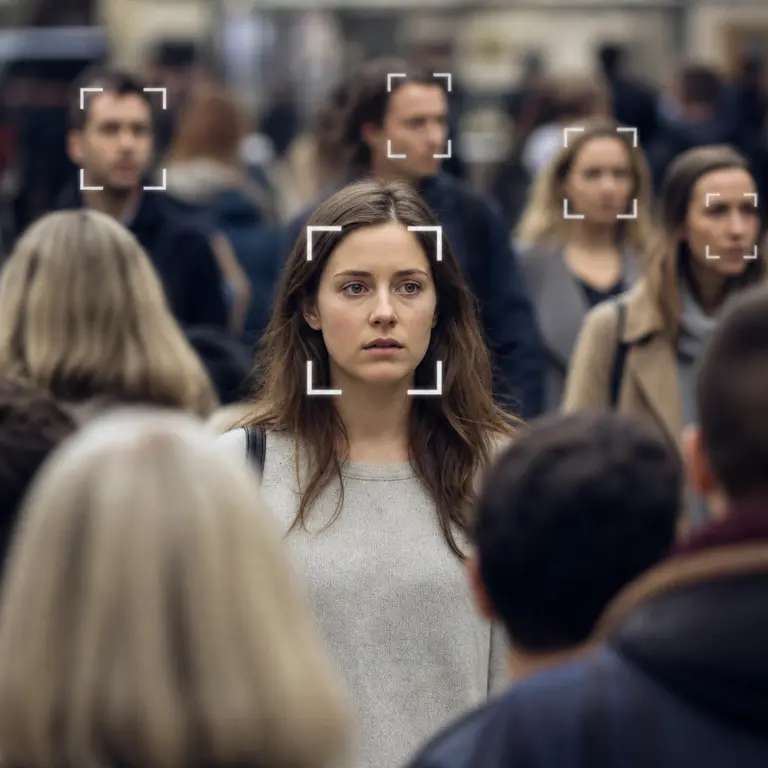
Prosopagnosia, the neurological condition that strips people of the ability to recognize faces, reveals how the brain separates identity into distinct processing streams — and is far more common than most people realize.
 Watch on YouTube
 Watch on Rumble
Introduction
In 2006, the developmental neuroscientist Brad Duchaine published research estimating that roughly 2.5 percent of the general population experiences significant difficulties with face recognition without any known brain injury. This condition, prosopagnosia — from the Greek prosopon meaning face and agnosia meaning lack of knowledge — had long been considered a rare consequence of stroke or traumatic brain damage. Duchaine’s work, later replicated across multiple populations, suggested that a heritable, developmental form of the condition affects approximately one in forty people. Most of them have never received a diagnosis and have spent their lives quietly constructing workarounds: memorizing gaits, hairstyles, voices, and the particular way a colleague tilts their head when laughing.
The condition sits at the intersection of neuroscience, cognitive psychology, and identity itself. To live without reliable face recognition is to navigate a social world that has been almost entirely architected around a perceptual ability you lack. What makes prosopagnosia particularly remarkable is not merely its prevalence but its invisibility. Unlike many neurological differences, it leaves no outward trace. The person sitting across from you at a meeting, nodding and smiling, may have no reliable memory of your face whatsoever. They are performing a kind of continuous social improvisation, reading contextual clues with the fluency of someone who has had no other choice. Understanding how this condition arises, what it reveals about the brain, and how it relates to the full spectrum of human face perception opens a window onto one of the most socially consequential and underappreciated areas of cognitive neuroscience.
The Fusiform Face Area and What Happens When It Fails
In the mid-1990s, neuroscientist Nancy Kanwisher and her colleagues at MIT identified a region in the fusiform gyrus of the temporal lobe that responds with striking selectivity to human faces. Using fMRI, they demonstrated that this region, now commonly called the fusiform face area (FFA), activates much more strongly to faces than to other complex visual objects, even when those objects are equally familiar. Subsequent research revealed that face processing is not confined to a single spot but involves a distributed network including the occipital face area, the superior temporal sulcus, and regions of the anterior temporal lobe. The picture that emerged was not of a single face recognition module but of an interconnected system whose components handle different aspects of the task, from initial detection to the extraction of identity, emotion, and social intention.
In people with acquired prosopagnosia — those who develop the condition following stroke, encephalitis, or traumatic injury — damage to the right fusiform gyrus or its connections is the most common finding. The celebrated neurologist Oliver Sacks, who wrote about prosopagnosia in his 1985 book The Man Who Mistook His Wife for a Hat, later disclosed that he himself had lived with the developmental form his entire life. He routinely failed to recognize colleagues and once apologized profusely to a stranger for bumping into him, only to realize he was looking at his own reflection. His case is instructive because it illustrates how high-functioning, intellectually accomplished individuals can carry significant perceptual differences for decades without ever framing their experience in clinical terms.
What makes the condition neurologically fascinating is what remains intact. Prosopagnosics typically recognize voices with normal or even heightened accuracy. They can read emotional expressions, determine approximate age and gender from faces, and often perform normally on tests of general object recognition. The deficit is specific, not global — a precision that tells researchers something profound about how the brain has carved identity perception into specialized, semi-independent modules. This modularity is not unique to face processing, but it is nowhere more striking than there. The brain appears to treat the recognition of individual human faces as a task so critical to social survival that it has dedicated distinct neural real estate to the problem, and the disruption of that real estate produces a deficit that is both narrow and profound.
Developmental prosopagnosia, the form that runs in families and appears without any history of brain injury, has added another layer of complexity to this picture. Twin studies suggest a substantial heritable component, and researchers have begun to identify candidate genes involved in the development of the fusiform network. The developmental form does not appear to result from damage to an otherwise normal system but rather from a failure of that system to develop its typical level of specialization in the first place. Brain imaging studies of developmental prosopagnosics show reduced activation in the FFA and weaker connectivity between face-processing regions, suggesting that the architecture itself is different rather than merely disrupted.
Super-Recognizers: The Opposite End of the Spectrum
At the far end of the same distribution sit super-recognizers, individuals who can identify faces with extraordinary accuracy even after a single brief encounter years earlier. The term was coined by researchers at Harvard in 2009, and subsequent work by Josh Davis at the University of Greenwich helped establish that this ability, like prosopagnosia, appears to be normally distributed across the population rather than an all-or-nothing gift. Most people fall somewhere in the broad middle range of face recognition ability, with genuine prosopagnosics at one tail and super-recognizers at the other, and the full continuum representing natural variation in the same underlying neural system.
The Metropolitan Police in London began formally recruiting super-recognizers to their ranks around 2011, initially to identify suspects from CCTV footage captured during the 2011 London riots. Officers with the trait were able to match faces across different lighting conditions, angles, and aging with accuracy that far exceeded that of both untrained civilians and, critically, the facial recognition software available at the time. A 2018 study published in Applied Cognitive Psychology found that the best human super-recognizers outperformed leading automated systems on degraded or partially obscured images — a finding that has quietly influenced how police forces across the UK, Australia, and Germany structure their visual identification units.
The practical implications extend well beyond law enforcement. Eyewitness misidentification remains one of the leading contributors to wrongful convictions in criminal justice systems around the world. Understanding that face recognition ability varies enormously across individuals — and that some witnesses are dramatically more reliable than others — has begun to inform how courts and investigators evaluate testimony. A super-recognizer who identifies a suspect from a blurry surveillance image is not simply lucky; they are drawing on a genuine and measurable cognitive advantage. Conversely, a witness with undiagnosed mild prosopagnosia may be entirely sincere in their identification while still being substantially unreliable.
The existence of super-recognizers also complicates any simple account of face processing as a fixed biological capacity. It suggests instead that the fusiform network, and whatever genetic architecture underlies it, varies substantially across individuals in ways that have real-world consequences for law enforcement, social cognition research, and the design of biometric systems. As artificial facial recognition technology continues to improve, the question of how human and machine recognition interact — where each excels, where each fails, and how they can best complement each other — has become a genuinely pressing one for both researchers and policymakers.
Identity, Masking, and the Pandemic’s Accidental Experiment
The widespread adoption of face masks during the COVID-19 pandemic created what researchers quickly recognized as an inadvertent natural experiment. Studies published between 2020 and 2022, including work by teams at the University of York and the University of Stirling, found that mask-wearing reduced face recognition accuracy in typical adults by measurable margins — sometimes as much as 15-20% on standardized tests. For people with prosopagnosia, the effect was less pronounced because they had already been relying on non-facial cues. For super-recognizers, the reduction was also smaller, suggesting that their advantage may partly stem from processing the upper face — the eye region — with unusual efficiency.
The pandemic period also prompted a surge in public disclosure from people who recognized their own difficulties for the first time. Online testing platforms developed by researchers at Harvard and at the University of New South Wales saw dramatic spikes in participation, and anecdotal reports from prosopagnosia support communities described members finally having a vocabulary for experiences they had always assumed were universal human failings. When everyone around them began struggling with masked faces, people who had always struggled quietly found that their experience was suddenly legible to others. The mask experiment, in other words, briefly made the invisible neurological architecture of face recognition visible to everyone.
This period of collective perceptual disruption also prompted a broader cultural conversation about the social weight that faces carry. Human societies have constructed enormous amounts of meaning around facial recognition — legal identity, personal trust, emotional intimacy, and professional memory. The discomfort that many people felt when masks became ubiquitous was partly practical and partly something deeper: a vague unease at the removal of a social signal so fundamental that most people had never consciously noticed how much they depended on it. For the roughly one in forty people who had always lived in something like that condition, the pandemic offered an unusual and bittersweet form of solidarity.
Conclusion
The broader lesson is one that neuroscience keeps returning to: what appears to be a seamless, automatic perceptual ability is in fact a complex, fragile, and individually variable computation — one that the brain has invested remarkable specialized resources in performing, and one whose absence reshapes not just perception but the entire social texture of a life. Face recognition is not simply a visual skill. It is infrastructure for human social life, so deeply embedded in how people form relationships, navigate institutions, and construct trust that its disruption touches nearly every domain of daily experience.
The spectrum from prosopagnosia to super-recognition also offers a reminder that neurological difference is not always a matter of pathology on one side and normality on the other. It is often a matter of distribution, with the same underlying variation that produces difficulty at one end producing remarkable ability at the other. Understanding distribution more fully — its genetic basis, neural correlates, and developmental origins — remains one of the more consequential open questions in cognitive neuroscience. The face-blind among us have been quietly pointing toward that question for their entire lives. It has taken the rest of the field some time to catch up.
Sources & Further Reading
- Duchaine, B., and Nakayama, K. The Cambridge Face Memory Test: Results for neurologically intact individuals and an investigation of its validity using inverted face stimuli and prosopagnosic participants. Neuropsychologia, 2006.
- Kanwisher, N., McDermott, J., and Chun, M.M. The fusiform face area: a module in human extrastriate cortex specialized for face perception. Journal of Neuroscience, 1997.
- Russell, R., Duchaine, B., and Nakayama, K. Super-recognizers: People with extraordinary face recognition ability. Psychonomic Bulletin and Review, 2009. https://doi.org/10.3758/PBR.16.2.252
- Davis, J.P., et al. Investigating the relationship between super-recognition and other face and object recognition abilities. Applied Cognitive Psychology, 2018.