
Fungi's Role in Innovative and Sustainable Energy Solutions
Discover how fungi are revolutionizing sustainable energy.
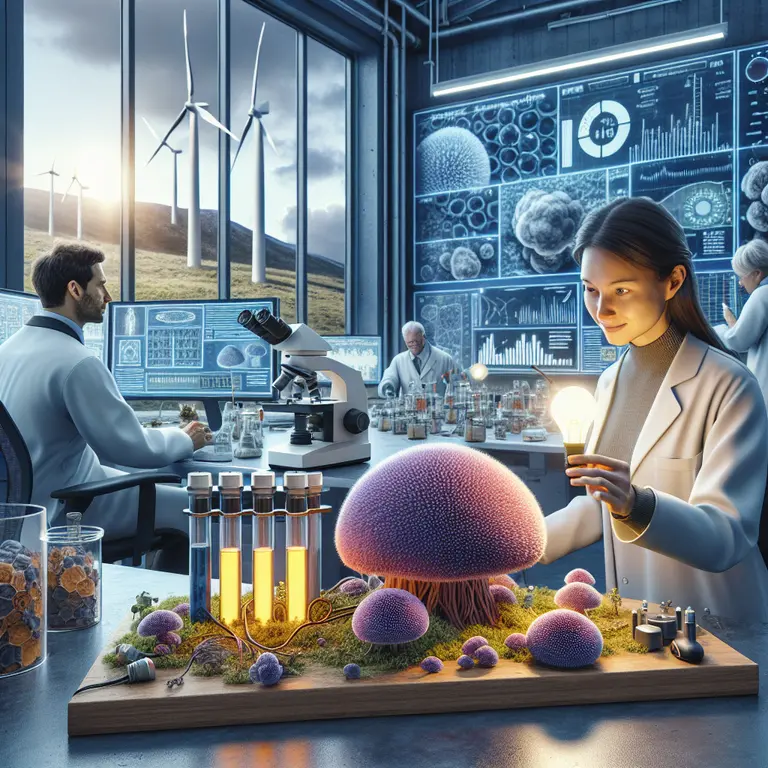
 Watch on YouTube
 Watch on Rumble
Introduction
Researchers have begun exploring unconventional avenues for sustainable and renewable energy sources, driven by the urgent need to move beyond fossil fuels and rethink how civilization powers itself. One such avenue that has gained significant attention in recent years is the potential role of fungi in next-generation energy solutions. While it may sound surprising at first, these humble organisms could play a crucial role in addressing some of the world’s most pressing environmental challenges, including carbon emissions, toxic waste accumulation, and the limitations of current biofuel technologies.
Fungi are a diverse group of organisms that includes yeasts, molds, and mushrooms, comprising an estimated 2.2 to 3.8 million species worldwide, the vast majority of which remain uncharacterized by science. They thrive in virtually every environment on Earth, from deep ocean sediments to arid desert crusts, and possess remarkable abilities to decompose organic matter that other organisms cannot efficiently process. This decomposition process releases enzymes that break down complex compounds into simpler molecules, effectively unlocking chemical energy stored in materials long considered waste. Scientists have recognized this natural capability and are now harnessing it for a range of innovative applications that span biofuel production, environmental cleanup, and even direct electricity generation. What makes this field particularly compelling is that fungi have been performing these functions for hundreds of millions of years, meaning nature has already done much of the engineering work that human researchers are only beginning to replicate.
Revolutionizing Biofuel Production
One of the most immediately promising areas where fungi show real potential is biofuel production. Traditional biofuels often rely on food crops like corn or sugarcane, which can compete with food resources, inflate commodity prices, and contribute to deforestation when grown at scale to meet industrial demand. However, certain fungal species can break down lignocellulosic biomass, such as agricultural waste, forestry residues, or wood chips, into fermentable sugars without requiring arable land dedicated solely to fuel production. This distinction is enormously important from both environmental and ethical standpoints.
The key lies in specific enzyme systems produced by these organisms during their metabolic activities, notably cellulases, which degrade cellulose, and lignin-degrading enzymes collectively called ligninolytic enzymes, which are particularly abundant among basidiomycetes, the wood-decaying class of fungi. These enzymatic cocktails enable efficient conversion processes by reducing the number of pretreatment steps compared to conventional methods that rely solely on chemical catalysts, thereby lowering costs while increasing sustainability across the entire supply chain. The white-rot fungus Trichoderma reesei, for instance, has become a workhorse of industrial enzyme production precisely because of its extraordinary capacity to secrete cellulases at scale. Researchers are now combining multiple fungal species in consortium approaches, allowing different organisms to handle distinct stages of biomass breakdown in a coordinated biological assembly line that mirrors how decomposer communities function in forest ecosystems.
The Science Behind Fungal Decomposition
Fungi’s remarkable efficiency in breaking down organic matter stems from their deep evolutionary adaptation as nature’s primary recyclers. Unlike bacteria, which typically operate on the surface of materials, fungal hyphae, the thread-like structures that form the body of a fungus, can penetrate deep into substrates and secrete enzymes that break down complex molecules such as lignin, cellulose, and hemicellulose directly at the site of contact. This physical architecture gives fungi access to chemical energy that most other organisms simply cannot reach.
This process, known as extracellular digestion, allows fungi to convert previously inaccessible carbon sources into usable forms of energy and nutrition. For instance, white-rot fungi such as Phanerochaete chrysosporium can completely mineralize lignin, one of Earth’s most recalcitrant natural polymers and a compound that has resisted efficient chemical degradation for decades of industrial research. Lignin constitutes roughly 15 to 30 percent of plant biomass by weight, making unlocking its energy content an enormous untapped resource. This capability offers a significant advantage over traditional chemical processes, which often require extreme temperatures, high pressures, or corrosive reagents that generate hazardous byproducts and require substantial energy inputs. The fungal approach, by contrast, operates at ambient temperatures and neutral pH, making it inherently more energy-efficient and environmentally benign. Understanding the precise molecular mechanisms by which fungi accomplish this feat, including the roles of peroxidases, laccases, and radical-generating oxidative systems, is an active area of biochemical research with direct implications for industrial process design.
Myco-Remediation: Cleaning While Generating
Beyond biofuel production, fungi are being investigated for their potential in environmental remediation and energy generation simultaneously, a dual-purpose application that makes them especially attractive from a systems-level perspective. This concept, broadly termed myco-remediation, involves using fungi to decontaminate polluted environments while producing valuable byproducts that can be further processed or harvested for energy.
Certain species of fungi have demonstrated the ability to metabolize a striking range of pollutants, including petroleum hydrocarbons, chlorinated solvents, pesticides, pharmaceutical residues, and even some heavy metals through biosorption mechanisms. As these fungi break down contaminants, they generate metabolic energy that could, in principle, be harvested by coupling them to electrochemical systems. Additionally, the fungal biomass that accumulates during remediation can later be processed into biofuels or biogas through anaerobic digestion, creating a dual-benefit system that addresses environmental damage and produces renewable energy from the same biological process. Field trials in petroleum-contaminated soils have demonstrated measurable reductions in hydrocarbon concentrations within weeks of fungal inoculation, results that would take years to achieve through natural attenuation alone. The economic logic is compelling: instead of spending resources solely on waste treatment with no return, myco-remediation offers the potential to recover value from contaminated land while restoring it to ecological health.
Fungal Biorefineries and Microbial Fuel Cells
The concept of a fungal biorefinery represents a holistic, arguably transformative approach to resource utilization. Unlike traditional refineries, which focus narrowly on fuel production from a single feedstock, fungal biorefineries aim to extract maximum value from biomass by producing multiple products simultaneously, including biofuels, biochemicals, nutritional compounds, and advanced biomaterials. In these integrated systems, fungi serve as biological catalysts, transforming raw agricultural or industrial residues into a portfolio of value-added outputs. Certain fungal species can convert crop residues into ethanol while simultaneously producing beta-glucans for the food supplement industry or generating medicinal compounds such as lovastatin, a cholesterol-lowering agent naturally synthesized by Aspergillus terreus. This diversified output model significantly improves the economic viability of biofuel production by generating additional revenue streams that subsidize overall operations, a critical factor in making renewable energy competitive with fossil fuel alternatives.
An equally exciting frontier involves using fungi in microbial fuel cells, a technology traditionally dominated by bacterial research. Scientists are now exploring fungal-based systems in which fungal metabolic activity directly generates electrical current. Recent studies have shown that certain fungal species can transfer electrons to electrodes during the degradation of organic matter, a process that converts chemical energy directly into electrical energy without intermediate combustion or mechanical steps. Although fungal microbial fuel cells are still in relatively early stages of development, they have demonstrated measurable power outputs in laboratory settings and offer theoretical advantages over bacterial systems, including greater substrate versatility and tolerance for variable environmental conditions. Potential applications include powering remote environmental sensors, providing localized electricity in off-grid agricultural settings, or contributing to distributed energy networks in regions where centralized infrastructure is impractical.
Challenges and Future Directions
Despite their remarkable promise, fungal-based energy solutions face several significant challenges that must be addressed before they can reach meaningful scale. Translating laboratory results to industrial processes remains difficult due to variable performance across different fungal strains, substrates, and environmental conditions. Enzyme production rates can fluctuate considerably depending on the composition of the growth medium, temperature, moisture levels, and competitive interactions with other microorganisms. Standardizing these variables at an industrial scale requires substantial engineering investment and ongoing process optimization.
Genetic engineering approaches are increasingly being applied to these challenges. Researchers are modifying key metabolic pathways in fungal genomes to increase enzyme yields, improve substrate utilization efficiency, and boost overall productivity. Advances in genomics, transcriptomics, and synthetic biology are providing new tools for understanding which genes control enzyme secretion and how those regulatory networks can be rationally modified. The recent development of CRISPR-based gene-editing tools adapted for use in fungal systems has accelerated this work considerably, enabling targeted modifications that would have taken years with older techniques.
Conclusion: Fungi in Our Energy Future
Integrating fungi into renewable energy systems represents a genuinely bio-inspired approach that aligns naturally with circular economy principles and the broader imperative to work with biological systems rather than against them. By utilizing organisms that have evolved over hundreds of millions of years specifically to recycle carbon-based materials, researchers can develop energy solutions that are embedded in natural processes, requiring fewer external inputs and generating fewer harmful outputs than conventional industrial alternatives.
As climate change concerns intensify and the hidden costs of fossil fuel dependence become increasingly difficult to ignore, unconventional approaches like fungal-based energy systems deserve serious scientific and policy attention. While they are unlikely to completely replace conventional energy sources in the near term, fungi offer genuinely complementary solutions that can contribute meaningfully to a diversified, resilient, and sustainable energy portfolio. The organisms underfoot, quietly decomposing the world’s biological waste for eons, may yet prove to be among our most valuable partners in the transition to a cleaner energy future.