Exploring the Absence of Sound in the Vastness of Space
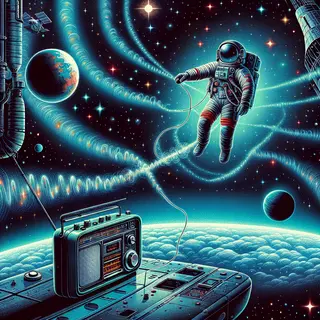
Sound can't travel in space due to the lack of medium.

Discover strange, surprising, and little-known facts from science, history, nature, and beyond.
 Space
Sound can't travel in space due to the lack of medium.
 Space
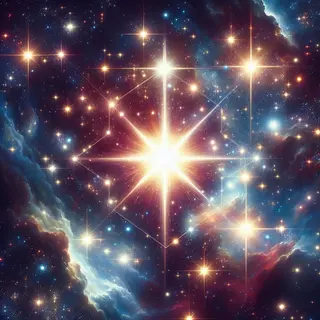
The Red Square Nebula, HD 44179, is a uniquely square-shaped star system located 2,300 light-years away. Its symmetrical features puzzle astronomers and suggest energetic central phenomena.
 Space
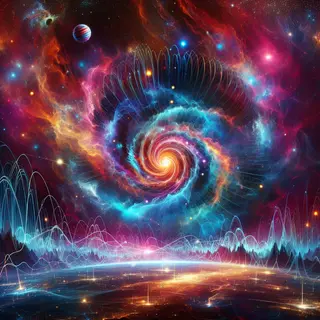
Fast Radio Bursts (FRBs) are extremely powerful emissions of radio waves detected from outer space, with origins still unknown to scientists.
 Space
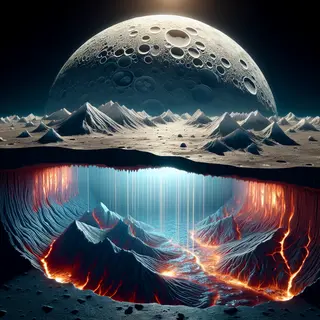
Moonquakes are caused because the Moon's surface is shrinking like a grape due to cooling of an ocean of molten rock beneath its surface.
 Space
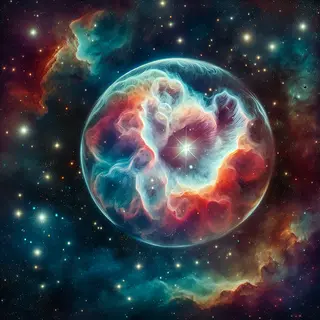
Bubble Nebula, also known as NGC 7635, is a nebula located in the constellation Cassiopeia which gets its shape from the stellar wind of the star at its center.
 Space
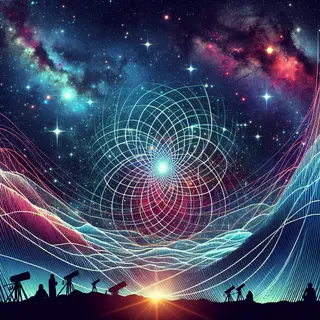
Cosmologists discovered an unusual alignment of temperature fluctuations in the cosmic microwave background that goes against our understanding of the universe.
 Space
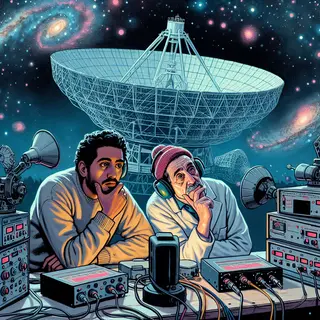
The cosmic microwave background radiation that fills up the universe was discovered accidently by two radio astronomers, Arno Penzias and Robert Wilson, while they were trying to eliminate noise from an antenna.
 Space
The Baikonur Cosmodrome, the world's first and largest operational space launch facility, was originally located in the Kazakh SSR under Soviet Union. However, post the dissolution of USSR, it now technically lies within the independent Republic of Kazakhstan.
 Space
The exoplanet HD 189733b in the constellation Vulpecula has a peculiar weather pattern where it literally rains glass, sideways.
 Space
Dark matter, the unseen and undetected form of matter that does not interact with light or electromagnetic radiation, makes up approximately 85% of the universe's total mass.
 Space
Voyager spacecrafts carry a Golden Record with greetings in 55 languages.
 Space
The Flora family is considered the oldest known asteroid family.
 Space
Astronauts can grow approximately up to two inches taller when they are in space.
 Space
Every year, the moon moves about 1.5 inches away from the Earth.
No spam. Just strange, useful, and fascinating knowledge.
We only use your email for site updates.
 YouTube
 Rumble