
Mysterious Portrait: The Face Found on the Barroom Floor
An unknown artist's masterpiece in the middle of Teller House bar in Central City, Colorado
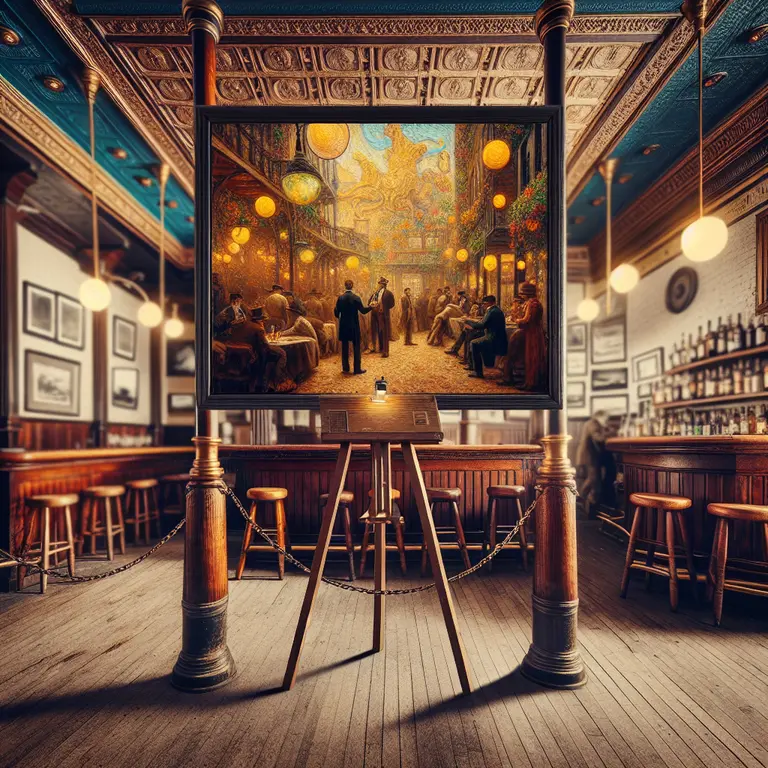
The Face on the Barroom Floor: A Hidden Masterpiece Beneath Your Feet
Imagine walking into a bar and discovering an entire painting, crafted with exquisite care, lying on the floor. This is precisely what you will find in the Teller House bar, situated in Central City, Colorado. Most patrons are taken aback by the beautiful artistry beneath their feet. The painting, known as The Face on the Barroom Floor, is one of those rare cultural artifacts that manages to be simultaneously famous and forgotten, celebrated locally yet largely unknown to the wider world. It is a piece steeped in legend, alcohol-fueled defiance, and the kind of spontaneous creativity that no art school curriculum could ever manufacture.
The Teller House and Its Place in Colorado History
To fully appreciate the painting, one must first understand the building that houses it. The Teller House is not merely a bar or a tourist curiosity. It is one of the most historically significant structures in the American West. Built in 1872 during the height of Colorado’s gold rush, the hotel was considered one of the most luxurious establishments between Chicago and San Francisco. It was named after Henry Moore Teller, a prominent Colorado politician who would go on to serve as a United States Senator and Secretary of the Interior under President Chester Arthur.
The hotel attracted presidents, dignitaries, and celebrities throughout the latter half of the nineteenth century. President Ulysses S. Grant famously walked across a path of silver bricks laid outside the entrance in his honor during a visit in 1873, a gesture meant to showcase the region's extraordinary mineral wealth. The building itself reflected that opulence, featuring ornate Victorian architecture, imported furnishings, and a grandeur that seemed almost incongruous with its rugged mountain surroundings. By the early twentieth century, however, Central City had fallen into significant economic decline as the mines dried up and the population dwindled. The Teller House sat in quiet deterioration alongside the rest of the town, waiting for something to breathe life back into it.
Origins of the Artwork
The revival of Central City came in the 1930s, when civic leaders and arts advocates began efforts to restore the town and transform it into a cultural destination. It was during this restoration period that the story of The Face on the Barroom Floor begins. The painting is said to have materialized overnight in 1936, created by an artist working under anything but conventional circumstances. The subject of the artwork is not known with absolute certainty, but various theories have been proposed over the decades. Some believe the face depicted is that of Dante Gabriel Rossetti’s lover, referencing the romantic and Pre-Raphaelite imagery that was fashionable in artistic circles of the era. Others suggest it may be a portrait of Walter DeMar's wife, a woman connected to the local scene. No definitive answer has ever been established, and that ambiguity has only deepened the painting’s mystique.
The painting itself depicts a woman’s face rendered with surprising technical skill directly onto the bar's wooden floorboards. The expression is serene yet melancholic, the kind of face that seems to watch you wherever you stand in the room. That the image has survived decades of foot traffic, spilled drinks, and the general wear of a working bar speaks both to the quality of its execution and to the deliberate efforts made to protect it.
Herndon Davis: The Artist Behind the Masterpiece
According to the most widely circulated and colorful version of the story, the man responsible for the painting was Herndon Davis, a Denver-based artist and journalist who had been hired to produce a series of murals throughout the Central City casino district during its revival. Davis was a man of genuine talent who occupied an interesting space between journalism and fine art. He contributed illustrations and articles to various publications while simultaneously building a reputation as a muralist capable of rendering historical scenes with authenticity and detail.
During the 1936 restoration effort, Davis painted several murals depicting significant events from Colorado’s frontier history across various buildings in Central City. He was brought into the project at the urging of Anne Evans, a formidable cultural figure who had dedicated much of her life to preserving Colorado’s artistic and architectural heritage. Evans was the daughter of Colorado’s second territorial governor, John Evans, and she wielded considerable influence over the direction of the town’s revival. It was her enthusiasm for Davis’s abilities that secured his involvement in the project.
The local legend, however, takes a dramatic turn from there. One evening, Davis allegedly consumed a considerable amount of alcohol and became embroiled in a heated argument with Evans herself. The precise nature of the disagreement varies depending on who is telling the story, but the most common version holds that Evans made dismissive or belittling remarks about Davis’s artistic capabilities, perhaps questioning whether his work truly met the standards she had envisioned for the restoration. Enraged and wounded by her criticism, Davis reportedly stumbled down into the Teller House bar and, in a fit of defiant inspiration, retrieved his paints and began working directly on the barroom floor.
What emerged from that night of anger and intoxication was a portrait of quiet, haunting beauty. Davis worked through the night, and by all accounts the result was technically accomplished in ways that seemed improbable given the circumstances of its creation.
The Morning After and the Decision to Preserve
The next morning, Davis allegedly had little to no memory of having created the painting. The story goes that he was as surprised as anyone to discover what his hands had produced in the night. The initial reaction from the bar’s management and the broader community was a mix of outrage and bewilderment. Painting directly onto someone else’s floor without permission was, at minimum, an act of considerable presumption. There were calls to have it removed or painted over.
Those calls did not prevail. As more people came to see the painting, the consensus shifted. The work was simply too beautiful, too unexpected, and too strangely perfect in its setting to be destroyed. The decision was made not only to leave it in place but to actively protect it. Over the years, various preservation measures have been employed to ensure the painting’s survival. A protective coating was eventually applied to shield it from the daily abuse of a working bar environment, and staff members have long been instructed to take care around the area where it lies.
The painting’s survival is itself something of a minor miracle. Bars are not museums. They are places of movement, noise, and liquid. That a floor painting has endured in such an environment for nearly nine decades is a testament to both the durability of Davis’s original work and the genuine affection the community has developed for it.
Preservation and Legacy
The Face on the Barroom Floor remains a relatively obscure piece of American cultural history, which is, in some ways, fitting for a work born of obscure circumstances. It does not appear in most surveys of American art. It is not discussed in the same breath as the great murals of the New Deal era, despite being created during the same period and sharing a similar spirit of public, accessible art. Its location on a bar floor in a small Colorado mountain town has kept it largely out of the mainstream conversation.
Yet for those who do encounter it, the painting tends to leave a lasting impression. There is something deeply affecting about discovering genuine artistry in a place where you least expect it. The painting connects visitors to a specific moment in American history, to the complicated personality of its creator, and to the broader story of a town that refused to disappear quietly. It reminds us that art does not always emerge from studios, galleries, or carefully planned commissions. Sometimes it emerges from anger, from loss of control, from a night that the artist himself could not fully remember.
The Teller House continues to operate today, and The Face on the Barroom Floor continues to greet visitors who look down at the right moment. It is a hidden gem in the most literal sense, embedded in the floor of a historic bar in a town that most people pass through without stopping. For those who do stop, and who take a moment to learn its story, it offers something rarer than technical brilliance. It offers a genuine human mystery, preserved in paint, waiting patiently beneath your feet.