
Exploring the Sophisticated Fashion of Bronze Age Europe
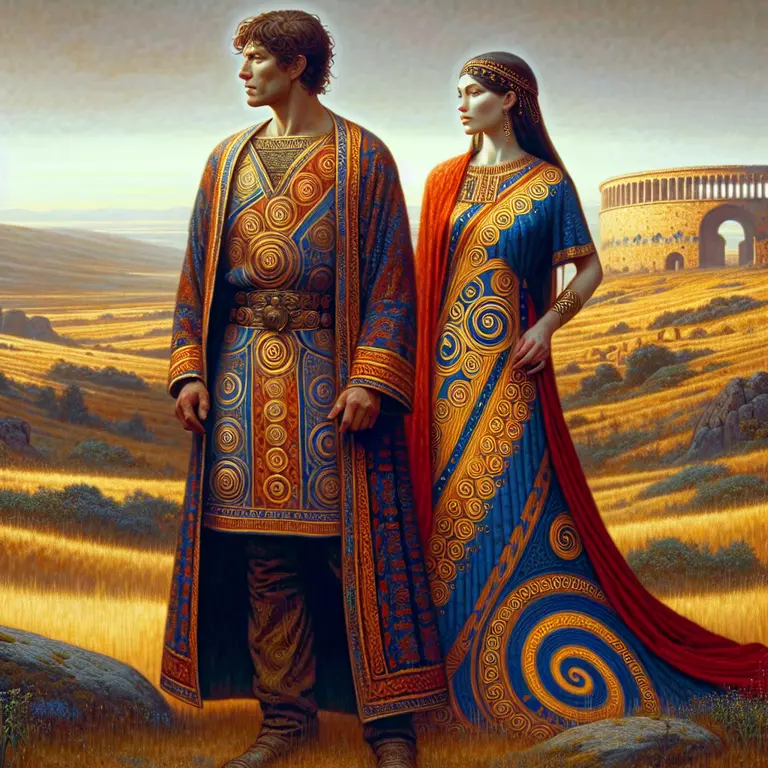
Bodies preserved in peat bogs reveal Bronze Age Europeans wore sophisticated, colorful clothing with complex patterns—not the drab, primitive garments depicted in popular culture.
 Watch on YouTube
 Watch on Rumble
The Vibrant, Sophisticated Fashion of Bronze Age Europe
When we imagine prehistoric Europeans, most of us envision people wrapped in crude animal skins or rough, earth-toned fabrics. This mental image couldn’t be further from the truth. Thanks to the remarkable preservative properties of peat bogs, we now know Bronze Age Europeans (3300-1200 BCE) were sporting vibrant, technically complex textiles that would impress even modern fashion designers.
Archaeological discoveries over the past century have revolutionized our understanding of prehistoric clothing. The acidic, anaerobic conditions of peat bogs across Northern Europe have preserved organic materials that would normally decompose within decades. These time capsules reveal a prehistoric fashion landscape characterized by technical sophistication, vibrant colors, and stylistic complexity, challenging our preconceptions about ancient technological capabilities and aesthetic sensibilities.
The Bog Body Fashion Revolution
Peat bogs create an acidic, oxygen-free environment that preserves organic material for millennia. The most famous bog bodies—like Denmark’s Tollund Man and Egtved Girl—have revealed clothing that defies all our assumptions about prehistoric fashion.
The Egtved Girl, who died around 1370 BCE in what is now Denmark, was buried in an oak coffin wearing an outfit that would be considered fashion-forward even by today’s standards. Her ensemble included a short string skirt made from hundreds of wool cords attached to a waistband, a cropped, fitted wool top with elaborate decorative patterns, a large woven belt with tasseled ends and geometric designs, and accessories including bronze ornaments and a horn comb.
Similarly, the Huldremose Woman, discovered in Denmark and dating to around 160 BCE (late Iron Age but demonstrating continuity in textile traditions), was found wearing multiple layers of sophisticated garments, including a plaid wool skirt and a sheep-wool scarf with an intricate tablet-woven border. The plaid pattern required precise control of multiple colored yarns during weaving, demonstrating advanced planning and technical skill.
What’s truly surprising is the technical sophistication. Microscopic analysis of Bronze Age textiles reveals advanced dyeing techniques using plants such as woad (blue), madder (red), and weld (yellow) to create vibrant colors and complex multicolor patterns. They employed sophisticated weaving methods, including tablet weaving, a technique using square cards with holes to create intricate patterns and borders. Rather than simple draped fabrics, many garments were tailored to fit the body with sewn seams, showing an understanding of three-dimensional garment construction.
The String Skirt Mystery and Ritual Significance
Perhaps the most surprising discovery is the prevalence of the “string skirt”—a garment consisting of hundreds of wool cords hanging from a waistband. Found on multiple bog bodies, these skirts required immense labor to produce and may have created a dramatic effect when worn.
The string skirt appears repeatedly in Bronze Age burials across a wide geographic area. The Borum Eshøj woman from Denmark, the Skrydstrup woman, and burials from northern Germany all feature variations of this distinctive garment. The ubiquity of this style suggests it held particular cultural significance beyond mere fashion.
Archaeologists have proposed several theories about the ritual significance of these skirts. Some believe they were connected to fertility rituals, as they emphasized the pelvic area while allowing freedom of movement during dance or ceremonial activities. Others suggest they may have signified marital status or social position within Bronze Age communities.
The construction of a single string skirt represented an enormous investment of labor. Experimental archaeology has demonstrated that producing the wool cords alone would require weeks of spinning, not counting the time needed to prepare the wool, weave the waistband, and assemble the final garment. This significant investment suggests these weren’t everyday garments but were reserved for special occasions or for individuals of high status.
Technical Sophistication and Material Science
The technical achievements evident in Bronze Age textiles extend far beyond what most people associate with prehistoric technology. Textile specialists examining these artifacts have identified sophisticated weave structures, including twill patterns that create diagonal lines and textures in the fabric. Some examples have thread counts comparable to those of modern medium-weight fabrics, with as many as 30 threads per centimeter.
The wool itself demonstrates selective breeding practices aimed at improving fiber quality. Microscopic analysis shows Bronze Age wool fibers were often finer and more consistent than those from earlier periods, suggesting deliberate breeding selection for textile production. This represents an early form of biotechnology, in which humans modify animal genetics for specific technical purposes.
Dye analysis has revealed complex chemical knowledge. Creating colorfast dyes required understanding which plants contained usable pigments and the mordants (metal salts) needed to bind those pigments permanently to fibers. Different mordants can yield different shades from the same plant material, creating a sophisticated color palette. Evidence suggests that Bronze Age dyers used alum, iron, and copper compounds as mordants, demonstrating a practical understanding of chemical interactions centuries before the formal development of chemistry.
Cultural Exchange and Fashion Identity
Bronze Age textiles also provide evidence of extensive trade networks and cultural exchange. The Egtved Girl’s outfit included bronze ornaments containing metal from as far away as the Alps, while her wool came from sheep raised hundreds of kilometers from her burial site. This suggests either long-distance trade in textiles or the movement of people carrying their distinctive clothing styles.
Some textile patterns show clear influences from Mediterranean and Near Eastern designs, indicating that fashion ideas traveled along the same trade routes as materials. These weren’t isolated cultures developing in a vacuum but interconnected societies sharing technological innovations and aesthetic preferences.
The regional variations in textile styles likely served as markers of cultural identity. Just as traditional clothing distinguishes cultural groups today, the specific weaving patterns, color combinations, and garment styles of Bronze Age communities would have immediately identified an individual’s origins to knowledgeable observers.
Challenging Modern Assumptions
This evidence fundamentally contradicts our narrative of linear progress in textile technology. In some ways, Bronze Age weaving was more complex than modern machine-produced fabrics. Each garment represented hundreds of hours of skilled labor, from spinning the thread to weaving and dyeing.
The preservation of these textiles also intersects with chemistry in unexpected ways. The same phenolic compounds that give peat its distinctive smell (and flavor in whisky production) created a tanning effect on both human remains and their clothing, essentially turning them into leather. This accidental preservation has given us a window into aspects of prehistoric life that would otherwise be completely lost to time.
Beyond Fashion: What Else Are We Getting Wrong?
This glimpse into Bronze Age wardrobes raises a profound question: if we’ve so fundamentally misunderstood something as basic as what people wore, what other aspects of prehistoric life have we completely misconceived? The vibrant, technically sophisticated clothing of these ancient Europeans suggests a society with aesthetic values, technical knowledge, and cultural sophistication far beyond what popular depictions suggest.
Our tendency to view prehistoric peoples as primitive reflects our own cultural biases more than archaeological reality. The evidence from textile archaeology suggests Bronze Age Europeans were innovative problem-solvers with complex social organizations that supported specialized craft production. Their technical achievements in textile production represent the culmination of generations of accumulated knowledge and experimentation.
Next time you imagine prehistoric humans, forget the drab animal skins. Instead, picture people dressed in vibrant blues and reds, wearing intricately patterned garments that took months to create—walking advertisements for their culture’s technical and artistic achievement. The true picture of our ancestors is not one of primitive simplicity, but of sophisticated ingenuity that deserves our respect and continued study.