
Why Your Shrimp Might Contain 15% Protective Ice Glaze
The surprising chemistry, regulations, and controversies behind frozen seafood's invisible ice coating
 Watch on YouTube
 Watch on Rumble
The Hidden Ice Layer You’re Paying For
Next time you buy frozen shrimp, weigh it after thawing. You’ll likely discover you’ve lost 10-15% of what you paid for—but this isn’t fraud, it’s federally regulated protection. This seemingly counterintuitive phenomenon represents an intersection of food science, regulatory policy, and consumer economics that few shoppers understand despite its direct impact on their wallets. Behind this invisible transaction lies a complex system designed to preserve seafood quality while navigating the practical challenges of global supply chains.
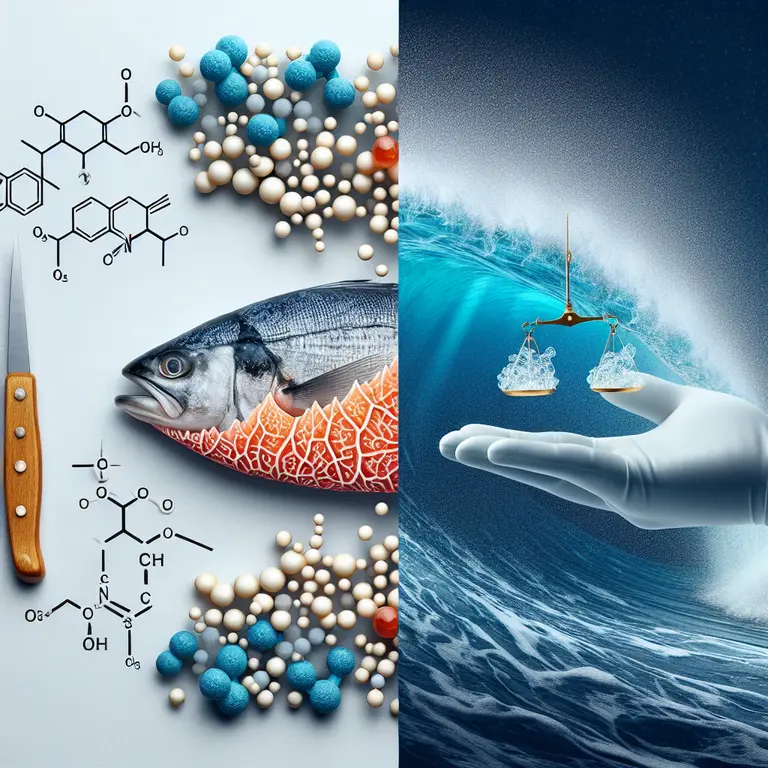
Frozen seafood, particularly shrimp and scallops, is routinely coated in a precise layer of ice called “glaze.” This ice shell acts as an invisible oxygen barrier, preventing freezer burn and rancidity. Without it, the high polyunsaturated fat content in seafood would rapidly deteriorate through oxidation, developing the distinctly unpleasant “fishy” smell that indicates spoilage.
The Chemistry of Seafood Preservation
What makes this practice particularly fascinating is the regulatory precision: the FDA and USDA specifically permit this ice coating but require manufacturers to exclude its weight when calculating the net weight on packaging. The legal term is “deglazed weight” or “drained weight.”
Yet this creates a paradox in consumer perception. When you buy “2 pounds” of glazed shrimp and end up with 1.7 pounds after thawing, you haven’t been cheated—you’ve received exactly what regulations specify. The declared weight refers only to the seafood itself, not its protective coating.
The science behind glazing reveals why this seemingly deceptive practice is actually essential. Seafood contains significantly higher proportions of polyunsaturated fatty acids than land-based proteins. These healthy fats contain multiple double bonds in their chemical structure, making them particularly vulnerable to oxidation when exposed to air. When oxygen molecules attack these bonds, they create hydroperoxides that subsequently break down into aldehydes and ketones—the volatile compounds responsible for that unmistakable “off” smell in spoiled fish.
Glazing works through a simple but effective process. Processors dip already-frozen seafood into cold water, which instantly forms a thin ice shell around the product. This barrier physically prevents oxygen from reaching the surface of the seafood. More sophisticated operations use specialized glazing machines that apply a uniform coating via a water spray system, sometimes incorporating antioxidants such as ascorbic acid or rosemary extract into the glaze water to further extend shelf life.
Interestingly, the history of seafood glazing predates modern refrigeration. Ancient fishing communities in coastal Japan and Scandinavia discovered that dipping fish in water during winter freezing created a protective ice layer that extended preservation. The modern commercial process was standardized in the 1950s as global seafood trade expanded, requiring products to have a longer shelf life as they traveled thousands of miles from harvest to plate.
The Soaked Scallop Controversy
This preservation technique intersects with another controversial seafood practice: the distinction between “wet” and “dry” scallops. Beyond glazing, some processors soak scallops in a solution containing sodium tripolyphosphate (STPP), which increases moisture retention. While glazing serves a legitimate preservation purpose, STPP treatment primarily increases weight through water absorption—up to 30% in some cases.
The distinction creates market confusion: “dry” (untreated) scallops command premium prices despite appearing smaller than their plumper “wet” counterparts, creating a counterintuitive value proposition where the visually less impressive product costs more.
The chemical mechanism underlying STPP treatment differs fundamentally from that of glazing. STPP is a phosphate compound that increases the seafood’s water-binding capacity by altering protein structures. It raises the pH of the muscle tissue, causing proteins to unfold and expose more water-binding sites. This not only adds weight but also changes cooking behavior—treated scallops release more moisture during cooking, making it difficult to achieve the desired caramelization that chefs prize.
Culinary professionals can identify treated scallops by their excessive milky liquid release during cooking and their tendency to shrink dramatically. By contrast, dry scallops maintain their volume better and develop a more intense flavor concentration. This quality difference explains why restaurants and discerning consumers are willing to pay premiums of $5-10 per pound for untreated product.
The Glazing Arms Race
In the competitive seafood industry, some processors have exploited this regulatory framework by applying excessive glaze—sometimes up to 40%—while still technically meeting labeling requirements. This practice, called “overglazing,” has spawned class-action lawsuits against major seafood brands and retailers.
The economic incentives for overglazing are compelling. Water costs virtually nothing compared to seafood, which can command $15-30 per pound wholesale. Each additional percentage point of glaze represents nearly pure profit. This creates what economists call a “race to the bottom,” where competitive pressures drive manufacturers toward increasingly aggressive glazing practices to maintain price competitiveness while preserving profit margins.
Enforcement challenges compound the problem. Regulatory agencies lack the resources to systematically test glazing percentages across thousands of imported seafood products. Most testing occurs only in response to specific complaints or as part of limited sampling programs. The testing process itself is relatively simple—thawing the product in controlled conditions and measuring weight loss—but it requires laboratory conditions for accurate results that would withstand legal scrutiny.
Some countries have implemented stricter standards to address these concerns. The European Union, for example, requires that the glazing percentage be explicitly declared on packaging when it exceeds 5%. This transparency requirement has significantly reduced overglazing in products destined for European markets, creating a regulatory divergence with North American standards.
Consumer Awareness and Market Solutions
This obscure food science detail connects to broader economic concepts, such as information asymmetry in markets—where sellers possess knowledge (about glazing percentages) that buyers lack—and the principal-agent problem in regulatory enforcement.
Consumer education represents one potential solution. Some specialty seafood retailers now voluntarily disclose glazing percentages or advertise “glaze-free” products as a premium offering. These market-based approaches allow informed consumers to make value-based purchasing decisions while creating competitive pressure for greater transparency.
Technology offers another promising avenue. Several companies have developed rapid testing devices that use electrical conductivity or near-infrared spectroscopy to estimate glaze percentages without destructive testing. These tools could eventually enable real-time verification at points of import or distribution, significantly improving enforcement capabilities.
So while it might initially seem like you’re being shortchanged when your seafood shrinks during thawing, you’re actually witnessing a carefully regulated preservation technique that extends shelf life while maintaining flavor—albeit one that creates a surprising disconnect between what you see in the package and what ends up on your plate.