
The Remarkable and Elevated Existence of Honey Bees
During her lifetime, a single honey bee will only produce around a twelfth of a teaspoon of honey.
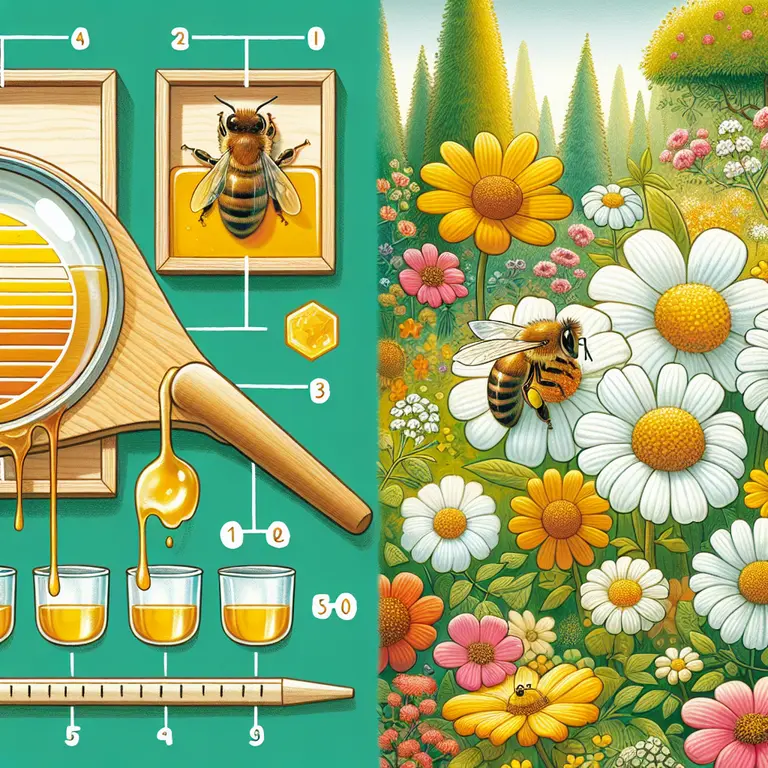
The Remarkable World of Honey Bees: Nature’s Most Essential Pollinators
Despite their small size, honey bees play an essential role in nature and human agriculture. These industrious creatures pollinate a vast array of plants, help sustain ecosystems, and contribute to the production of food crops worldwide. Their contribution to the environment and food supply cannot be overstated, and the complexity of their social structure and work ethic is nothing short of remarkable. To truly appreciate the honey bee, one must look beyond the jar of honey sitting on a kitchen shelf and consider the extraordinary biological machinery, social organization, and ecological significance that make this tiny insect one of the most consequential creatures on Earth.
The Unique Behavior of Honey Bees
One of the most well-known characteristics of honey bees (Apis mellifera) is their ability to sting in defense of their hive. However, what sets honey bees apart from other types of bees is that only honey bee workers die after stinging. This happens because when they sting a target, their barbed stinger becomes lodged in the skin, resulting in fatal injury when the bee tries to fly away. This sacrifice is part of their role in protecting the hive, as honey bees will sting only when they perceive a serious threat to their colony.
What makes this behavior even more fascinating is that it represents a form of biological altruism that has evolved over millions of years. When a worker bee stings and tears herself away, the detached stinger continues to pump venom into the target for several seconds, maximizing the defensive effect even after the bee has sustained her fatal injury. The act also releases an alarm pheromone that signals other bees in the vicinity to join the defense. This chemical communication system is highly sophisticated, allowing the colony to mount a coordinated response to threats without any centralized command. The individual dies so the collective can survive, a principle that governs nearly every aspect of honey bee life.
Beyond stinging behavior, honey bees are also known for one of the most remarkable forms of non-human communication ever documented: the waggle dance. When a forager bee returns to the hive having located a rich source of nectar or pollen, she performs a precise figure-eight movement on the surface of the honeycomb. The angle of the dance relative to vertical corresponds to the direction of the food source relative to the sun, and the duration of the waggle run indicates the distance. Other bees observe and interpret this dance, then fly directly to the location described. This system of symbolic communication, encoding direction, distance, and quality of a resource, was first decoded by Austrian ethologist Karl von Frisch in the 1940s, earning him a Nobel Prize in 1973.
The Queen Bee and the Architecture of Colony Life
At the center of every hive is the queen bee, the sole reproductive member of the colony. The queen is easily distinguished by her larger size and can live up to five years, making her the longest-living bee in the hive. Her primary function is to lay eggs and ensure the continuity of the hive’s population. In her prime, a queen bee can lay up to 2,500 eggs daily, maintaining the colony’s growth and sustaining a population that can reach 60,000 or more individuals during peak summer months.
Interestingly, the queen’s ability to lay so many eggs depends on the colony’s health and the availability of resources. Worker bees feed the queen and, in return, regulate the hive’s behavior through the release of pheromones, which help maintain social cohesion and productivity. The queen produces a specific chemical signal, the queen mandibular pheromone, which suppresses the reproductive development of worker bees and signals to the colony that a healthy queen is present. When this signal weakens or disappears, workers begin preparing to raise a new queen by selecting a small number of fertilized eggs and feeding the developing larvae an exclusive diet of royal jelly, a protein-rich secretion produced by nurse bees. It is this diet alone, rather than any genetic difference, that determines whether a larva becomes a worker or a queen, a remarkable example of how environment shapes biological destiny.
The process of queen succession can also occur through swarming, which is the primary means by which honey bee colonies reproduce at the colony level. When a hive becomes overcrowded, the existing queen departs with roughly half of the worker bees to establish a new colony elsewhere, while the remaining bees raise a new queen to take over the original hive. Swarming is a carefully orchestrated event, with scout bees searching for suitable nesting sites days in advance and reporting back through their waggle dances. The colony then reaches a collective decision about which site to occupy, a process that researchers have compared to democratic deliberation.
The Short but Vital Life of Worker Bees and the Making of Honey
While the queen enjoys a relatively long life, worker bees, which are all female, have a much shorter lifespan. They typically live for around five to six weeks during the active summer months. During this time, they go through different stages of responsibility, starting as nurse bees tending to the larvae and graduating to foragers who leave the hive to collect nectar and pollen. This age-based division of labor is not rigidly fixed, however. Colonies can adjust the pace at which bees transition between roles in response to the hive’s needs, demonstrating a level of adaptive flexibility that continues to impress researchers.
Despite their short lives, worker bees contribute enormously to the hive’s functioning. One of their most notable roles is producing honey, which requires visiting an extraordinary number of flowers. In its lifetime, a single worker bee produces a mere one-twelfth of a teaspoon of honey, a tiny amount that highlights the immense collective effort needed to keep the hive supplied with food. To put this into perspective, it takes approximately 864 worker bees to produce just one ounce of honey, and to create this amount, the bees must visit around two million flowers. Honey production involves multiple steps, from collecting nectar to storing it in honeycomb cells, where it is gradually dehydrated and transformed into honey by the bees’ constant wing-fanning, reducing the moisture content to around 17 percent and creating a product that is chemically stable enough to last indefinitely.
Worker bees also produce beeswax, used to build the hive’s honeycombs. Beeswax is secreted by special glands on the worker bees’ abdomens and molded into hexagonal cells, which provide maximum storage space with minimal material. Engineers and mathematicians have long admired the hexagonal honeycomb structure for its geometric efficiency, and studies have confirmed that it is the optimal shape for dividing a flat surface into equal-area cells with the least possible material. The honeycombs house not only honey but also eggs, larvae, and pollen stores, making them critical to the overall organization and function of the hive.
Pollination, Agricultural Dependence, and the Threats Facing Honey Bees
Beyond honey production, honey bees play a crucial role in pollination, which is essential for the reproduction of many plants, including crops. As bees collect nectar and pollen from flowers, they inadvertently transfer pollen between plants, facilitating fertilization. This process is critical for the growth of fruits, vegetables, and nuts, and it is estimated that one-third of the food we eat depends on pollination by bees and other pollinators. Honey bees pollinate a wide variety of plants, from apples and almonds to blueberries and cucumbers. The almond industry in California alone relies almost entirely on managed honey bee colonies for pollination, with beekeepers transporting millions of hives across the country each year to service orchards during the brief flowering season.
The economic value of honey bee pollination to global agriculture has been estimated in the hundreds of billions of dollars annually, a figure that underscores just how deeply human food systems are intertwined with the fate of this single species. Yet honey bees face numerous threats, raising serious concerns about their declining populations. Colony collapse disorder, a phenomenon in which worker bees abruptly disappear from the hive, has devastated managed colonies across North America and Europe. While its exact causes remain the subject of ongoing research, the consensus points to a combination of pesticide exposure, habitat loss, nutritional deficiency, climate change, and disease acting in concert to overwhelm the bees’ immune and navigational systems.
Parasites like the Varroa mite represent one of the most immediate and well-documented threats. This external parasite, which arrived in Western honey bee populations in the latter half of the twentieth century, feeds on the fat bodies of developing and adult bees and transmits a range of debilitating viruses. Colonies infested with Varroa mites weaken steadily and often collapse within a few years without intervention. Beekeepers and researchers are developing new strategies to combat these threats, including selective breeding for mite-resistant traits, biological control methods, and improved hive management practices.
Conclusion: The Incredible Impact of Honey Bees
The life of a honey bee is a testament to the power of collective effort and the importance of each individual in ensuring the colony’s survival. Every bee plays a vital role in the hive’s complex and efficient society, from the queen bee’s tireless egg-laying to the worker bees’ relentless foraging, communication, and honey production. The fact that one ounce of honey represents the life’s work of 864 bees visiting two million flowers is a humbling reminder of the intricate balance of nature and the invisible labor that sustains so much of what humans take for granted.
Honey bees do not merely produce a sweet food product. They underpin entire agricultural systems, support wild plant biodiversity, and serve as sensitive indicators of ecosystem health. Their decline is not simply a problem for beekeepers or farmers but a warning signal about the broader condition of the natural world. Continued investment in research, conservation, and reducing pesticide use in agricultural landscapes is not optional if we wish to preserve both this remarkable species and the web of life it helps sustain. Understanding and protecting the honey bee is, in many ways, an act of understanding and protecting ourselves.