
Optimal Plant Spacing: The Pencil Technique Explained
You can use a standard pencil to measure and create appropriately distanced holes for plant seeds in your garden.
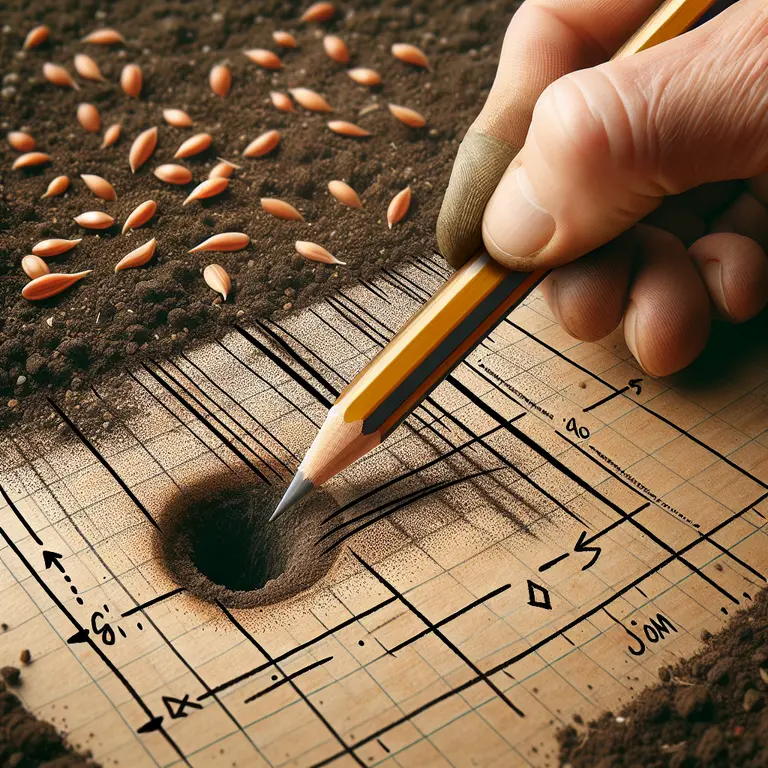
The Pencil as a Gardening Tool: A Simple Trick for Better Results
Gardening can be a deeply gratifying hobby, offering a connection to the natural world and the quiet satisfaction of watching something grow from a tiny seed into a thriving plant. Yet for all its rewards, gardening also demands a level of precision that can feel intimidating, particularly for beginners. Getting seeds into the ground at the right depth and the right distance apart is not a casual affair — it is a science with real consequences for the health of your plants. For those looking to make their gardening more precise without investing in specialized tools, there is a surprisingly capable implement already sitting on your desk: a pencil. This everyday object can serve as a practical and reliable tool for planting seeds at the correct depth and spacing, both of which are critical for healthy plant growth. Whether you are an experienced gardener or just starting out, this simple trick can help you achieve better results while keeping things easy and affordable.
Why Planting Depth and Spacing Matter
To appreciate why a pencil can be so useful in the garden, it helps to first understand what is actually at stake when you plant a seed. The depth at which a seed is sown and the distance between each seed are not arbitrary preferences — they are essential biological requirements that directly influence whether a plant will germinate, establish itself, and eventually thrive.
Planting depth matters because seeds rely on specific conditions to trigger germination. A seed planted too shallow may dry out quickly, be exposed to temperature fluctuations, or become dislodged by wind or rain before it has a chance to take root. On the other hand, a seed buried too deeply may exhaust its stored energy trying to push a sprout up through the soil before it can begin photosynthesizing. Different seeds have different requirements based on their size and biology. Smaller seeds, such as those of lettuce or carrots, are typically planted close to the surface, often no deeper than a quarter inch. Larger seeds, like beans or squash, can handle and often require depths of an inch or more.
Spacing is equally consequential. When seeds are planted too close together, the resulting plants compete aggressively for the same limited resources — sunlight, water, and soil nutrients. This competition can stunt the growth of all plants involved, reduce yields, and make them more vulnerable to disease and pest infestations, as stressed plants have weakened defenses. Proper spacing gives each plant the room it needs to develop a healthy root system and canopy, ultimately producing stronger, more productive growth. For the home gardener, getting these two variables right from the very beginning is one of the most impactful things they can do, and a pencil turns out to be a remarkably effective aid in achieving both.
How to Use a Pencil for Planting Seeds
A standard pencil measures approximately 7.5 inches in length and about 0.25 inches in diameter, dimensions that translate surprisingly well into practical gardening measurements. These proportions make the pencil a versatile reference tool across a range of common seed-planting scenarios.
For measuring planting depth, the pencil's diameter provides a natural unit of measurement. Because most pencils are roughly a quarter inch wide, pressing the pencil tip into the soil to a depth equal to one pencil-width gives you approximately a quarter inch — the correct planting depth for many small seeds. For seeds requiring half an inch of depth, you simply press the tip down to twice the pencil’s diameter. To plant at greater depths, you can mark intervals directly onto the pencil using a permanent marker, indicating one-inch, two-inch, or three-inch depths along the shaft. This transforms the pencil into a reusable depth gauge that can be customized to suit whatever you are planting on any given day.
For spacing, the length of the pencil becomes your guide. If seeds require four inches of spacing, you can use the pencil itself as a measuring stick, placing each seed at intervals measured along its length. For seeds requiring spacing of 7 or 8 inches, the full length of the pencil provides a convenient approximation. If you are working with multiple types of seeds with different spacing requirements, keeping a few pencils on hand and marking each with its designated spacing interval can streamline the process.
The pencil's pointed tip also solves a practical problem many gardeners encounter: creating clean, uniform seed holes without disturbing the surrounding soil too much. By pressing the pencil tip gently but firmly into prepared soil, you create a neat, consistent hole that holds its shape and places the seed at a reliable depth. This is particularly useful in container gardening or raised bed gardening, where soil is often loose and finely textured, making it easy to accidentally plant seeds unevenly if you are working by feel alone.
A Technique Rooted in Gardening History
The idea of using a pencil as a planting tool is not a modern invention. It belongs to a long tradition of resourceful improvisation that has characterized gardening since humans have cultivated the earth. Early gardeners, particularly those in rural communities, did not have access to the specialized tools and precision instruments that fill garden centers today. They worked with what was available: sticks, fingers, the handle of a hoe, or whatever object happened to be nearby and useful.
The pencil, once it became a common household item in the nineteenth and early twentieth centuries, naturally found its way into the garden as a practical measuring aid. Its uniform dimensions made it more reliable than a stick of unknown size, and its pointed tip made it ideal for creating seed holes in soft soil. Gardeners who grew up watching parents or grandparents use this technique often carried it forward, passing it along as practical wisdom that required no manual and no expense.
This kind of knowledge — informal, tactile, and passed down through observation rather than instruction — represents a significant and often underappreciated dimension of horticultural history. Long before gardening apps and precision seed-planting devices, people developed clever, low-cost solutions to the same fundamental challenges that gardeners face today. The pencil trick is a small but meaningful example of this tradition, and the fact that it remains genuinely useful in an era of sophisticated gardening technology speaks to the enduring value of simple, well-adapted tools.
Practical Advantages and Additional Tips
Beyond its historical charm, using a pencil for seed planting offers concrete, everyday advantages that make it worth adopting as a regular practice. The most obvious benefit is cost. Specialized seed dibbers, depth gauges, and spacing tools can add up in expense, particularly for gardeners who are just getting started and may not yet be sure how committed they are to the hobby. A pencil costs almost nothing and is almost certainly already in the house.
The pencil is also highly accurate for the scale of most home gardens and container plantings. While professional or commercial growers working with large acreage may need more sophisticated measuring systems, the home gardener planting a window box or a small raised bed will find that pencil-based measurements are more than adequate for achieving consistent results. The tool is also intuitive — there is no learning curve, no assembly required, and no instructions to read. Almost anyone can pick up a pencil and immediately understand how to use it as a depth gauge or spacing guide.
For gardeners who want to refine the technique further, a few additional practices are worth considering. Marking the pencil with permanent ink at multiple depth intervals allows you to switch between measurements quickly without stopping to re-measure. Using a length of garden twine stretched between two stakes at either end of a planting row helps ensure that your seed holes remain in a straight line, with the pencil used to create each hole at consistent intervals along the twine. This combination of twine and pencil produces rows that are both straight and evenly spaced, which improves not only the aesthetics of the garden but also air circulation between plants. If you are planting several different seed varieties with different requirements in the same session, dedicating a separate pencil to each variety and labeling them accordingly prevents confusion and keeps the process organized.
Conclusion
The humble pencil, so familiar that it is easy to overlook, turns out to be a genuinely capable gardening tool when you know how to use it. By leveraging its consistent dimensions as a guide for planting depth and seed spacing, and by using its pointed tip to create clean, uniform seed holes, gardeners can give their plants the best possible start without spending money on specialized equipment. This approach is grounded in real horticultural science — the importance of depth and spacing to germination and plant health — and it draws on a tradition of practical resourcefulness that stretches back through generations of gardeners who made do with what they had, achieving impressive results. The next time you prepare to plant seeds, consider reaching for a pencil before you head outside. It may be the most useful tool in the garden that you never thought to bring.