
Coca Cola's Transparent Beverage Variation: an Unique Twist
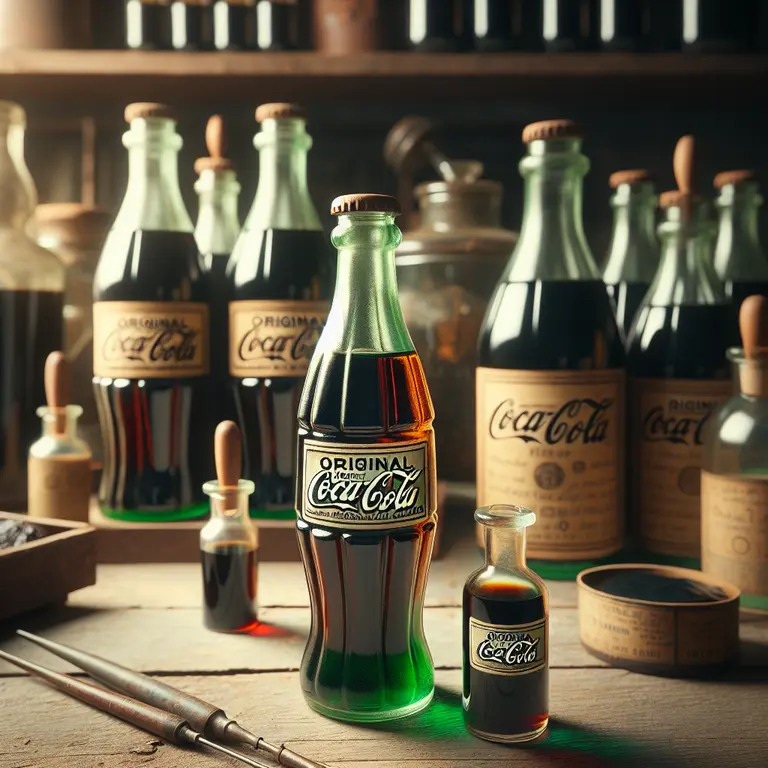
Coca Cola was initially a greenish-brown color before it was dyed to become brown.
Introduction
Coca-Cola is one of the most recognizable beverages in the world today, known not only for its distinctive taste but also for its rich brown color and iconic red branding, which has come to symbolize American consumer culture worldwide. Yet the story behind this ubiquitous drink is far stranger and more layered than most people realize. The original version of the beverage, created by pharmacist John Stith Pemberton in 1886, bore little resemblance to the product sitting on store shelves today. It was not sold in gleaming bottles with cheerful advertising campaigns. It was dispensed from a pharmacy counter as a medicinal preparation, marketed to the sick and the weary rather than to anyone looking for refreshment on a warm afternoon.
Understanding the origins of Coca-Cola requires stepping back into the world of 19th-century American medicine, a world where the boundaries between pharmacy and quackery were often blurry, where cocaine was a respectable ingredient in commercial products, and where the appearance of a remedy could matter just as much as its actual effects. The story of how a greenish-brown tonic became the world’s most famous soft drink is, at its core, a story about ambition, accident, and the strange alchemy of branding.
The Early Formula: Coca Leaves, Kola Nuts, and the Medicine of the Era
When Pemberton first invented Coca-Cola, it was intended as a medicinal tonic rather than a consumer beverage. Pemberton was a pharmacist based in Atlanta, Georgia, and like many practitioners of his era, he was deeply interested in the emerging field of patent medicines. These were proprietary preparations sold directly to the public, often with sweeping claims about their ability to cure fatigue, headaches, nervous disorders, and a wide variety of other complaints. The late 19th century was a golden age for such products, and competition among formulators was fierce.
Pemberton’s original formula combined two key ingredients that were considered genuinely powerful by the medical standards of the time. The first was coca leaves, which contain small amounts of the stimulant cocaine. Far from being a controversial substance in 1886, cocaine was widely regarded as a legitimate and beneficial compound. It had been isolated from coca leaves only a few decades earlier, and prominent figures in medicine, including Sigmund Freud, had written enthusiastically about its potential to treat depression and morphine addiction. Coca-based products appeared in wine, lozenges, and tonics across Europe and North America, and their use carried no particular social stigma.
The second major ingredient was kola nuts, native to tropical rainforests of West Africa and rich in caffeine. Kola nuts had been used for centuries in West African cultures for their stimulating properties, and by the latter half of the 19th century, they had attracted the attention of Western pharmacists and food manufacturers who were eager to exploit their energizing effects. Together, coca and kola gave Pemberton’s formula a genuinely stimulating character, and the drink was marketed accordingly as something that could sharpen concentration, relieve fatigue, and restore vitality.
However, the result of this original mixture was not the deep, inviting brown color we associate with Coca-Cola today. The early formula produced a drink with a murky greenish-brown hue, a color that was not particularly appealing to consumers and that did little to distinguish the product from the dozens of other tonics crowding pharmacy shelves at the time.
The Role of Caramel: Transforming Appearance and Identity
It was the addition of caramel that changed everything, at least visually. Pemberton added caramel coloring to his recipe as a practical solution to an aesthetic problem. Caramel, produced by heating sugar until it darkens and develops complex flavor compounds, transformed the unappealing greenish-brown of the original formula into a deeper, more consistent, and more visually attractive shade of brown. It also contributed a faint sweetness and subtle complexity to the drink's flavor profile, making it more palatable to a wider range of consumers.
This decision, which might seem minor in retrospect, was actually a pivotal moment in the brand's history. The change in color helped Coca-Cola stand out in an era when the appearance of a medicinal product carried enormous weight with consumers. People purchasing tonics and remedies made judgments based on smell, taste, and visual presentation, and a drink that looked murky or unappealing was at a serious disadvantage, regardless of its actual effects.
The addition of caramel also marked a subtle yet important shift in the product's identity. By improving its visual appeal and refining its taste, Pemberton was unconsciously moving the drink away from the purely medicinal category and toward a consumer beverage. Coca-Cola was beginning its long transformation from pharmacy tonic to cultural institution, and caramel coloring was one of the first steps along that path. To this day, caramel color remains a listed ingredient in Coca-Cola’s formula, making it one of the most enduring and consequential additions in the drink’s history.
Pemberton’s Personal History and the Shadow of Addiction
One of the more compelling and contested dimensions of Coca-Cola’s origin story involves the personal circumstances of its inventor. Pemberton served in the Confederate Army during the American Civil War and was wounded in the Battle of Columbus in April 1865, one of the final engagements of the conflict. Like many soldiers who suffered serious injuries during the war, he was treated with morphine, and it is widely reported that he subsequently developed a dependency on the drug.
This context has led some historians and commentators to suggest that Pemberton’s interest in coca-based preparations was not purely commercial. Cocaine was being actively investigated during this period as a potential treatment for morphine addiction, and Pemberton may have been motivated, at least in part, by a desire to find a substitute that could address his own dependency. Whether or not this theory holds up to rigorous historical scrutiny, it lends a deeply human dimension to the story of the drink’s creation. The founder of what would become one of the world’s most valuable brands may have been, in part, a man searching for personal relief.
Pemberton died in 1888, just two years after introducing his formula to the world, having sold portions of his rights to the recipe to various parties to cover his mounting debts. He never witnessed the extraordinary commercial success that his creation would eventually achieve, and he reportedly died in poverty. The full story of his motivations and struggles remains somewhat obscured by the passage of time, but the surviving fragments paint a portrait of a complex man working at the intersection of medicine, commerce, and personal suffering.
The Evolution of the Formula and the Persistence of the Brand
Over the decades following Pemberton’s death, Coca-Cola’s formula underwent a series of significant changes driven by shifting consumer preferences, advances in scientific understanding, and regulatory pressures. By the early 20th century, growing public concern about cocaine and the passage of the Pure Food and Drug Act of 1906 created strong incentives for the Coca-Cola Company to remove cocaine from its formula entirely. The company complied, and by around 1903, the cocaine content had been effectively eliminated, though decocainized coca leaf extract continued to be used as a flavoring agent, a practice that reportedly continues today under a special arrangement with a licensed processor.
The beverage continued to evolve throughout the 20th century, with adjustments to sweeteners, carbonation levels, and flavoring agents allowing it to be mass-produced and distributed on an increasingly global scale. The most dramatic and publicly visible change came in 1985, when the company attempted to reformulate the drink entirely as New Coke, a decision that provoked such intense public backlash that the original formula was reinstated within months. The episode demonstrated just how deeply the drink had embedded itself in cultural identity, reinforcing the importance of consistency and tradition to the brand’s appeal.
Through all these changes, the deep brown color introduced by Pemberton’s caramel addition has remained a constant. It is one of the few unbroken threads connecting the medicinal tonic of 1886 to the global beverage of today.
Conclusion
Coca-Cola’s early history reveals a remarkable convergence of 19th-century medical culture, personal biography, and commercial instinct. From its origins as a greenish-brown pharmacy preparation combining cocaine and caffeine to the globally distributed soft drink it became, the beverage’s journey is shaped by decisions both deliberate and accidental. The addition of caramel coloring, a practical fix for an aesthetic problem, turned out to be one of the most consequential choices in the history of consumer branding. The personal struggles of its inventor added a layer of human complexity that the polished mythology of the modern brand tends to obscure.
What makes this history genuinely surprising is not simply the presence of cocaine in the original formula, which is well known enough to have become a kind of trivia staple, but rather the degree to which the drink’s iconic identity was shaped by improvisation, circumstance, and the particular pressures of a very specific historical moment. Coca-Cola did not arrive fully formed as a cultural icon. It was assembled, adjusted, recolored, and reimagined over many decades by people responding to forces largely beyond their control. That the result has proven so durable is perhaps the most remarkable fact of all.