
Unique Stripe Patterns Make Each Tiger One-Of-A-Kind
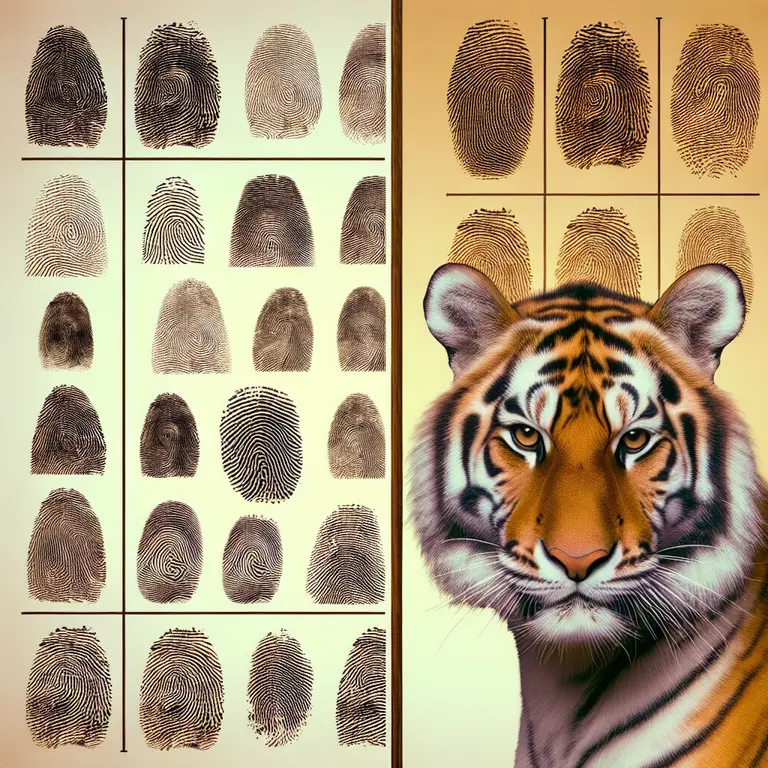
Just like human fingerprints, no two tigers have the same stripe pattern.
Introduction
Tigers are among the most recognizable animals on Earth. Their bold, contrasting coats have captivated human imagination for thousands of years, inspiring mythology, art, and cultural symbolism across Asia and beyond. Yet beneath the surface of this visual spectacle lies something far more scientifically significant than mere beauty. The stripes of a tiger are not simply decorative features produced by random genetic chance. They are a deeply embedded biological phenomenon, a survival mechanism shaped by millions of years of evolution, and increasingly, a practical instrument in the hands of modern conservationists.
As with human fingerprints, no two tigers share the same stripe pattern. Every individual animal carries a completely unique pattern across its body, a natural identifier as reliable as any barcode. This remarkable characteristic has profound implications not only for understanding tiger biology but also for the research and conservation efforts designed to protect a species that remains critically endangered across its remaining range in Asia. To fully appreciate the tiger stripe, one must look beyond its surface and examine what it reveals about the animal beneath.
How Tiger Stripes Aid in Identification
The uniqueness of tiger stripes has transformed the way researchers and conservationists approach wildlife monitoring. In the past, identifying individual tigers in the wild required invasive methods such as tranquilizing animals and fitting them with radio collars or ear tags. These procedures carry real risks to the animals and demand significant resources. The realization that stripe patterns could serve as reliable natural identifiers opened a new path forward.
By photographing tigers in the field and running those images through pattern recognition software, experts can now track the movement, behavior, and population health of individual animals without any physical intervention. The process functions similarly to facial recognition technology used in human contexts, but instead of mapping facial geometry, the software analyzes the precise arrangement, width, and spacing of stripes along the tiger’s flanks, shoulders, and limbs. Each tiger’s pattern remains consistent throughout its life, making it a permanent and non-invasive form of identification.
This approach has been instrumental in helping conservationists monitor endangered populations across fragmented habitats in India, Russia, Sumatra, and elsewhere. Researchers can determine whether a tiger spotted in one location has previously been recorded in another area, track territorial shifts over time, and identify when a known individual has disappeared from a region, potentially signaling death or displacement. Data gathered through Stripe identification feeds directly into population assessments that guide policy decisions and funding allocations for tiger protection programs.
Stripes Beneath the Fur: A Deeper Biological Phenomenon
One of the lesser-known and genuinely surprising facts about tiger stripes is that they are not confined to the fur itself. If a tiger were shaved, the same pattern of stripes would remain clearly visible on the skin beneath. This occurs because the pigmentation responsible for the stripe pattern is embedded within the skin cells, not merely expressed in the hair follicles that produce the outer coat. The stripes exist at a deeper biological level than most people assume.
This trait is shared by relatively few mammals and has long intrigued biologists studying the genetics and developmental biology of coat patterning. The coloration of a tiger’s coat is produced by melanocytes, specialized cells that synthesize melanin pigment. In striped regions, these cells produce eumelanin, which creates the dark brown or black coloration. In the orange or lighter regions between the stripes, a different pigment balance is expressed. The spatial arrangement of these pigment-producing cells is determined during fetal development, governed by a complex interplay of signaling molecules and genetic instructions.
Recent research has shed light on the molecular mechanisms behind stripe formation in cats. Studies on tabby cats, which are far more accessible for laboratory research than tigers, have identified a protein called Dickkopf-related protein 4 (DKK4) as a key player in establishing the periodic pattern of light and dark regions on developing skin. This discovery, published in 2021 by researchers at the University of Edinburgh, suggests that stripe patterns in cats may be laid down in the skin before hair follicles have even fully formed. For tigers, whose stripes are among the most dramatic in the animal kingdom, similar mechanisms are almost certainly at work, though the full genetic picture remains an active area of investigation.
The Evolutionary Purpose of Tiger Stripes
The evolutionary significance of tiger stripes extends well beyond aesthetics or individual identification. Tigers are ambush predators, and their stripes are a critical component of their hunting strategy. The vertical orientation of the stripes, combined with the interplay of orange, black, and white tones, creates a disruptive coloration effect that breaks up the outline of the tiger’s body against the visual noise of its environment. In the dappled light of forest undergrowth or the swaying geometry of tall grass, a tiger can become remarkably difficult to detect, even at relatively close range.
This camouflage is particularly effective because the tigers' primary prey, including deer and wild pigs, have limited color vision. To these animals, the orange tones of a tiger’s coat appear closer to green or yellow, making the tiger even harder to distinguish against a background of vegetation. The tiger’s stripes, therefore, exploit a specific perceptual weakness in its prey, a product of co-evolutionary pressure over millions of years.
Beyond hunting, tiger stripes may also serve communicative functions within the species itself. Tigers are largely solitary animals, but they do encounter one another during territorial disputes, mating seasons, and mother-offspring interactions. The white spots on the backs of tiger ears, often described as ocelli, are thought to function as social signals, possibly mimicking eyes to deter threats from behind or to help cubs follow their mothers through dense vegetation. Whether the broader stripe pattern plays a role in individual recognition between tigers in the wild is still being studied, but the possibility adds another dimension to an already complex biological story.
Modern Uses in Conservation and Research
For most of human history, the uniqueness of tiger stripes was little more than an intriguing curiosity. It was not until the convergence of digital photography, remote sensing technology, and machine learning that this biological feature became a genuinely powerful conservation tool. Today, organizations including the World Wildlife Fund and Panthera use high-resolution camera traps, drone surveillance, and sophisticated image analysis software to photograph and catalog individual tigers across their Asian ranges, building comprehensive databases of known individuals.
Camera traps, placed along game trails and near water sources frequented by tigers, capture images automatically when triggered by motion or heat. These systems operate continuously without human presence, reducing disturbance to the animals and allowing data collection across vast areas that would be impractical to monitor on foot. The images collected are processed using stripe recognition algorithms that can match new photographs against existing records with a high degree of accuracy, flagging potential new individuals or confirming the continued presence of known ones.
Alongside photographic methods, non-invasive techniques, such as the collection and genetic analysis of tiger scat, provide complementary data on population structure, diet, health, and relatedness among individuals. Together, these approaches allow researchers to estimate population sizes, detect poaching pressure, and monitor reproductive success over time. Programs such as India’s Project Tiger, which has overseen a significant recovery in tiger numbers since its founding in 1973, and Russia’s Amur Tiger Conservation Project have both benefited from integrating stripe identification into broader monitoring frameworks.
Conclusion
The striped pattern of a tiger’s coat is far more than a visually stunning feature of one of the world’s most iconic animals. It is a deeply embedded biological phenomenon rooted in the animal’s skin and genetics, a finely tuned evolutionary adaptation that has made tigers formidable hunters across diverse Asian landscapes, and an increasingly vital tool in the global effort to prevent their extinction. From the molecular signals that lay down stripe patterns in developing embryos to the satellite-linked camera traps that photograph tigers in remote forest corridors, the science of tiger stripes spans scales from the cellular to the continental.
As technology continues to advance, the ability to identify and track individual tigers by their unique markings will become increasingly precise and widely applicable. Combined with habitat protection, anti-poaching enforcement, and community engagement in tiger range countries, these tools offer genuine hope that tigers will continue to move through the world’s remaining wild places. The stripe, it turns out, is not just a mark of beauty. It is a record, a signal, and ultimately, a lifeline.