
The Centennial Light: The World's Longest-Lasting Light Bulb
There is a light bulb in Livermore, California that has been continuously on since 1901.
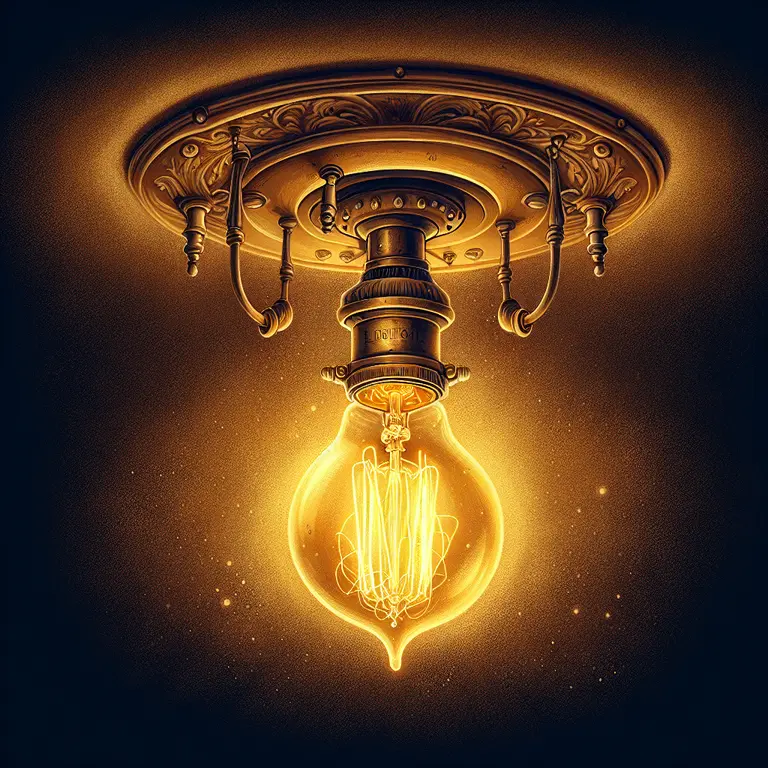
 Watch on YouTube
 Watch on Rumble
Introduction
The Centennial Light is a remarkable exception in a world where technological devices and household items are often designed with limited lifespans. Nestled in the Livermore-Pleasanton Fire Department at 4550 East Avenue in Livermore, California, this light bulb has illuminated its surroundings for over a century. Its longevity has earned it recognition from the Guinness Book of World Records, Ripley’s Believe It or Not!, and General Electric as the world’s longest-lasting light bulb. The Centennial Light is not merely a scientific anomaly but a symbol of durability, craftsmanship, and the value of sustainable design.
What makes this story so compelling is not just the raw number of years the bulb has been burning, but the broader questions its existence raises. In an age where smartphones are outdated within two years, appliances are engineered to fail just after their warranties expire, and fast fashion fills landfills with barely-worn clothing, a light bulb that has been glowing since the early twentieth century feels almost like a rebuke from the past. It forces us to confront uncomfortable truths about how and why modern products are made the way they are, and whether a different approach is not only possible but urgently necessary.
A Brief History of the Centennial Light
The story of the Centennial Light began in the early 1900s. Installed during an era of emerging electrical technology, the bulb was manufactured by the Shelby Electric Company, an Ohio-based firm known for its high-quality carbon filament products. The exact date of its installation remains uncertain, though most historical accounts place it somewhere around 1901. Early records indicate the Livermore Fire Department initially used it as a night light, keeping the station’s hose cart room dimly but reliably illuminated through the long watches of the night.
Over its extraordinary lifespan, the bulb has survived multiple relocations and renovations, a testament to its durability and the careful stewardship of those who maintained it. It moved from one fire station building to another as the department grew and modernized, and each time it was transported, handlers treated it with the kind of reverence usually reserved for fragile museum artifacts. That care has clearly paid off.
Despite some ambiguity about its original wattage, with estimates suggesting it may have been a 30-watt or 60-watt bulb when first installed, it now emits a soft glow at approximately four watts. The reduction in output over time is consistent with the natural degradation of a carbon filament, which gradually thins and dims rather than snapping suddenly, as tungsten filaments often do. While this dim light may not be suitable for practical illumination today, it is a constant and quietly astonishing reminder of what enduring technology can look like when given the right conditions to survive.
What Makes the Centennial Light So Special?
The Centennial Light’s extraordinary lifespan can be attributed to several interconnected factors that set it apart from every light bulb manufactured and sold over the past several decades.
One of the primary reasons for the bulb’s longevity is its remarkably low power consumption. At only 4 watts, the bulb generates minimal heat during use. Since excessive heat is one of the most destructive forces acting on a light bulb’s filament, this lower power draw significantly enhances its durability. The reduced energy throughput means the filament is far less prone to the wear and tear caused by repeated cycles of thermal expansion and contraction, a process that gradually weakens the structural integrity of any material subjected to it.
The bulb was also manufactured during a period when quality and durability were treated as genuine priorities in product design rather than marketing buzzwords. The filament, often the first component to fail in a conventional bulb, is made from carbon rather than the tungsten filaments used in modern incandescent bulbs. Carbon filaments are not only more robust under sustained low-level operation but also more flexible under varying electrical loads, allowing them to absorb minor fluctuations without fracturing. Additionally, the glass envelope surrounding the filament is notably thicker and more resilient than what is found in contemporary bulbs, providing an extra layer of protection against environmental factors and minor physical shocks.
Another critical factor in the bulb’s extended life is its near-constant operation. Unlike typical household bulbs, which are frequently switched on and off throughout the day, the Centennial Light has remained mostly lit throughout its existence. This matters more than most people realize. Each time a light bulb is switched on, a surge of electrical current passes through the cold filament, which has a much lower resistance than a warm one. This surge creates a brief but intense mechanical and thermal shock that progressively degrades the filament. By avoiding these repeated power surges over more than a century of operation, the Centennial Light has experienced far less cumulative stress than any bulb subjected to typical household use patterns.
A Community Icon and Source of Pride
The Centennial Light is more than just a marvel of technology. It has become a beloved symbol of community identity and local pride in a way that few inanimate objects ever achieve. The Livermore-Pleasanton Fire Department has served as its dedicated custodian for decades, ensuring its preservation through building renovations, equipment upgrades, and occasional power outages that have threatened to end its run. On at least one occasion, firefighters reportedly used a battery-powered backup system to keep the bulb lit during a facility transition, so committed were they to maintaining its unbroken record.
The fire department eventually set up a dedicated webcam to share this remarkable artifact with the world, allowing people anywhere with an internet connection to check in and see the bulb still glowing in real time. This small act of technological transparency has significantly amplified the light bulb’s fame, attracting viewers from dozens of countries who visit the stream out of curiosity, nostalgia, or a simple desire to witness something that defies ordinary expectations. There is something quietly moving about the fact that one of the most-watched livestreams on the internet is not a sporting event or a celebrity broadcast, but a single dim bulb hanging in a California fire station.
The Centennial Light has become a quirky yet profound cultural touchstone, bridging generations through its gentle and unwavering glow. Children who first learned about it in school science classes have grown old and told their own grandchildren about it. It occupies a unique space in the public imagination, simultaneously a piece of local history, a scientific curiosity, and a philosophical provocation about the nature of lasting things.
Engineering Marvel or Fortunate Fluke?
The Centennial Light has sparked considerable debate among engineers, historians of technology, and product designers. Some attribute its endurance primarily to its construction era, a time when products were built to last rather than designed for planned obsolescence. The Shelby Electric Company employed high-quality materials and precise, unhurried manufacturing techniques that modern mass production frequently sacrifices in the pursuit of lower costs and higher margins. In this reading, the Centennial Light is not an accident but an inevitable outcome of making something properly.
Others propose that the bulb’s longevity results from an unusually fortunate convergence of ideal conditions rather than superior design alone. The stable and consistent electrical supply it has received over the decades, the extremely low operating wattage, and the near-continuous operation have together created an environment that minimizes stress on every component of the bulb. Remove any one of those factors, and the bulb might well have burned out decades ago. In this view, the Centennial Light is a lesson in the importance of context as much as construction.
The truth likely lies somewhere between these two positions. The bulb was undeniably well-made by the standards of its time, and that quality created a foundation for longevity. But it also needed the right circumstances to translate that potential into reality. What the debate ultimately highlights is that technological durability is never purely a matter of materials or design in isolation. It is the product of manufacturing quality, operating conditions, maintenance practices, and a degree of good fortune, all working in concert over time.
The Symbolism and Legacy of the Centennial Light
Beyond its physical and technological significance, the Centennial Light carries a weight of symbolism that grows heavier with each passing year. It represents an era when products were crafted with genuine longevity in mind, in contrast to today’s culture of disposability and rapid replacement cycles. The light bulb challenges modern perceptions of product life cycles and encourages serious reflection on sustainability, resourcefulness, and the ethics of how things are made and discarded.
The story of the Centennial Light also offers concrete and actionable lessons for contemporary designers and manufacturers. It demonstrates that low operating stress, quality materials, and consistent rather than intermittent use can together produce outcomes that seem almost impossible by modern standards. As society confronts the accelerating crisis of electronic waste, with millions of tons of discarded devices piling up in landfills and informal recycling sites around the world each year, the example of a bulb that has lasted since the presidency of Theodore Roosevelt is not merely charming. It is instructive in the most urgent possible sense.
Furthermore, the light bulb’s story underscores the often-overlooked importance of maintenance and stewardship. The Livermore-Pleasanton Fire Department’s decades-long dedication to preserving the bulb reflects how caring for existing technology can extend its life and utility far beyond what its creators might have imagined. It reminds us that not all technological progress lies in innovation and replacement. Sometimes, it is found in the patient and attentive preservation of what we already have.
Conclusion
As the Centennial Light continues to shine, it embodies a rare and meaningful blend of history, technology, and community spirit. Whether it lasts another year or another decade, it has already cemented its legacy as one of the most extraordinary artifacts of the industrial age, a marvel of engineering and a symbol of enduring craftsmanship that speaks across generations. It challenges us to think more carefully about how we design and use technology today, and inspires us to consider longevity as a genuine and serious measure of innovation rather than an afterthought.
Through its humble yet persistent glow, the Centennial Light invites us to appreciate the lasting impact of well-made things and to ask, with renewed urgency, why we so rarely make them that way anymore. In a world that moves faster every year, there is something deeply valuable about a light that simply refuses to go out.