
The Fungal Network Rewiring Brain Cancer Treatment
Emerging research reveals that fungi living inside glioblastoma tumors actively influence cancer progression, immune evasion, and may soon reshape how the deadliest brain cancer is treated.
The Unexpected Residents of Brain Tumors
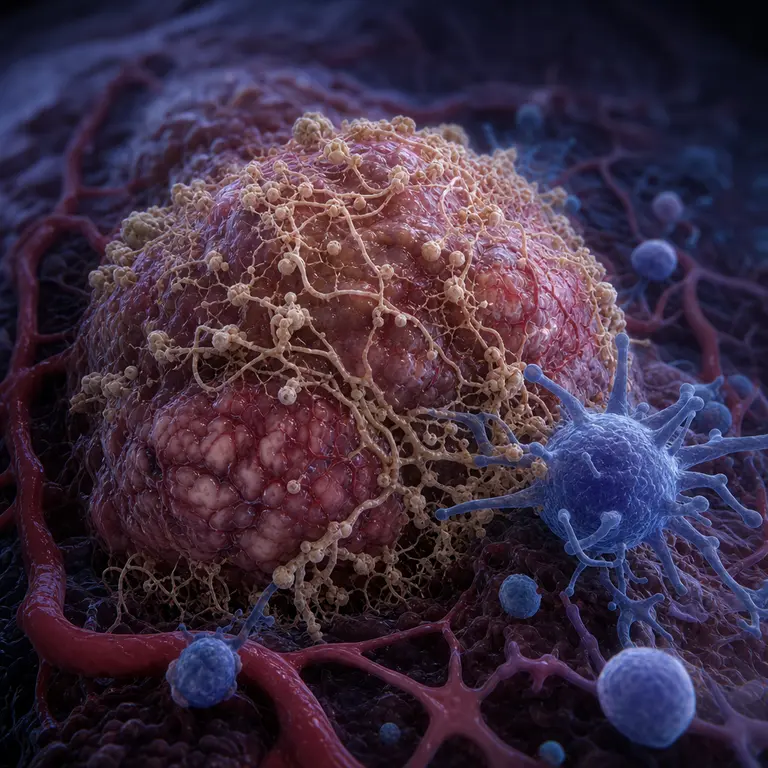
For decades, the internal environment of a brain tumor was understood primarily through the lens of mutated human cells, corrupted signaling pathways, and a suppressed immune system. The idea that fungi might be permanent, metabolically active residents inside glioblastoma — the most aggressive and lethal form of primary brain cancer — was not seriously entertained by mainstream oncology. That assumption has begun to crack in ways that are reshaping how researchers think about what a tumor actually is. A series of studies published between 2022 and 2024, drawing on metagenomic sequencing of tumor tissue, have identified consistent fungal signatures within glioblastoma biopsies, with Candida and Aspergillus species appearing with notable regularity across independent sample sets from multiple institutions. These are not contaminants introduced during surgical collection or laboratory processing. The fungi carry distinct transcriptional profiles suggesting they are alive, actively metabolizing nutrients, and interacting with the surrounding tumor microenvironment in ways that may worsen patient outcomes in ways no existing treatment model has ever addressed.
The median survival for glioblastoma patients receiving standard treatment — surgery, radiation, and temozolomide chemotherapy — remains approximately 15 months. Despite decades of clinical trials involving targeted therapies, immunotherapy, and experimental surgical approaches, no therapeutic breakthrough has moved that number meaningfully. The disease remains a near-certain death sentence within two years for the overwhelming majority of patients. The discovery of an intratumoral mycobiome adds a dimension to glioblastoma biology that existing treatment models never accounted for, and it raises the possibility that antifungal strategies, long confined to the management of systemic infections in immunocompromised patients, could become an unexpected adjunct to oncological care. The implications extend beyond glioblastoma specifically, touching on fundamental assumptions about the sterility of the brain and the nature of the tumor microenvironment.
How Fungi Survive Inside a Tumor
The brain was long considered a sterile organ, protected by the blood-brain barrier from microbial colonization under normal physiological conditions. That model has been progressively dismantled over the past decade, first by studies confirming the existence of a low-biomass brain microbiome in healthy tissue, and now by evidence that tumors create permissive niches for microbial life that would ordinarily be excluded. Glioblastomas are highly vascularized, often hemorrhagic, and produce a chronically immunosuppressed local environment that is fundamentally different from the surrounding healthy brain tissue. Regulatory T cells and myeloid-derived suppressor cells dominate the tumor microenvironment, preventing the immune system from mounting effective attacks against malignant cells. This same immunosuppression that protects the cancer from the host’s defenses also happens to create a favorable habitat for opportunistic fungi that would normally be cleared by a functioning immune response.
Fungi detected in glioblastoma tissue appear to exploit the tumor’s leaky, abnormally formed vasculature as an entry point into the central nervous system. The blood vessels that tumors generate through angiogenesis are structurally disorganized and lack the tight junction integrity that characterizes healthy cerebral vasculature, effectively creating gaps in what should be an impermeable barrier. Once established within the tumor mass, fungi produce immunomodulatory compounds including mannans and beta-glucans, which are structural components of fungal cell walls that interact directly with pattern recognition receptors on immune cells. These interactions further skew local immune responses toward tolerance rather than elimination, creating a feedback loop in which the fungi actively reinforce the conditions that allowed them to survive in the first place. Research published in Cell in 2022 demonstrated that across multiple cancer types, intratumoral fungi correlate with specific immune suppression signatures, and glioblastoma samples showed among the strongest such correlations within the central nervous system cancer cohort analyzed. The presence of fungi in the tumor is not, in other words, a passive coincidence. It appears to be an active and self-reinforcing biological relationship.
The Metabolic Dimension: Fungi as Competitors and Collaborators
Beyond immune modulation, the metabolic relationship between fungi and glioblastoma cells introduces another layer of complexity that researchers are only beginning to characterize. Tumor cells are notorious for their altered metabolism — the Warburg effect describes how cancer cells preferentially consume glucose through glycolysis even in the presence of sufficient oxygen, generating energy less efficiently but producing metabolic intermediates that support rapid proliferation. Fungi are equally aggressive glucose consumers, and inside a nutrient-limited tumor microenvironment, this creates what might initially appear to be a competitive dynamic. However, emerging data suggest the relationship is not purely antagonistic. Certain fungal metabolites produced by species already identified in glioblastoma tissue appear to have effects that inadvertently benefit tumor survival by targeting immune cells rather than cancer cells.
Gliotoxin, a secondary metabolite produced by Aspergillus fumigatus, provides perhaps the most striking example of this dynamic. Gliotoxin has a well-characterized immunosuppressive mechanism involving the inhibition of the transcription factor NF-kB, which plays a central role in regulating inflammatory responses and immune cell activation. In laboratory conditions, gliotoxin has been shown to suppress T cell proliferation and induce apoptosis in immune cells, effects that are well understood in the context of invasive aspergillosis in immunocompromised patients but have never been systematically studied within a solid tumor microenvironment. If fungi within glioblastoma are actively secreting gliotoxin or related epipolythiodioxopiperazine compounds into the surrounding tissue, they may be functioning as unwitting pharmacological allies of the cancer, suppressing immune surveillance through a completely non-human biochemical mechanism that existing immunotherapy approaches are not designed to counteract.
This metabolic and chemical crosstalk between fungal residents and tumor cells also raises questions about how antifungal treatment might alter the broader biochemical landscape of the tumor. Eliminating the fungal population could theoretically reduce the concentration of immunosuppressive metabolites, but it might also disrupt other metabolic exchanges that have not yet been characterized. The tumor microenvironment is already understood to be a dynamic ecosystem involving cancer cells, stromal cells, immune cells, and the extracellular matrix. Adding fungi to that picture does not simply introduce a new variable in isolation — it potentially changes the relationships between all the other variables simultaneously.
Clinical Implications and the Road Ahead
The practical implications of intratumoral fungi in glioblastoma are still being worked out, but several distinct research directions have already emerged from the initial wave of discovery. The first and most immediately actionable involves investigating antifungal agents as part of combination therapy protocols. Fluconazole, voriconazole, and amphotericin B are all capable of crossing the blood-brain barrier to varying degrees, and some researchers have begun examining whether incorporating antifungal treatment into standard glioblastoma protocols could reduce fungal burden and partially restore immune competence within the tumor microenvironment. The hypothesis is straightforward: if fungi are contributing to local immunosuppression, removing them should make the tumor more vulnerable to both endogenous immune responses and immunotherapeutic interventions. No large-scale clinical trial has yet been completed, but pilot protocols are under discussion at several neuro-oncology centers, and the existing safety profiles of established antifungal drugs make them more tractable candidates for rapid clinical translation than entirely novel compounds.
A second direction involves using the fungal signature itself as a diagnostic or prognostic biomarker. Because different fungal species appear in different proportions depending on tumor grade and molecular subtype, the mycobiome profile of a biopsy might eventually refine prognosis or predict treatment response in ways that current genetic and epigenetic markers cannot. A 2023 preprint from researchers at the University of California San Francisco described a machine-learning classifier trained on intratumoral microbial sequencing data — including fungal reads — that could distinguish glioblastoma from lower-grade gliomas with accuracy exceeding 85 percent. If that finding holds up under validation, the mycobiome could become a clinically useful component of the diagnostic workup, providing information that is currently inaccessible through standard pathology or molecular profiling alone.
The third and perhaps most speculative direction concerns the possibility of engineering the tumor mycobiome therapeutically rather than simply eliminating it. Bacteriophage therapy has already entered early clinical testing for certain bacterial infections and cancer-associated microbiomes; analogous antifungal biologics or mycovirus-based interventions targeting tumor-resident fungi represent a more distant but conceptually coherent goal. Mycoviruses, which are viruses that naturally infect and replicate within fungal cells, have been studied primarily in the context of agricultural plant pathogens, but their potential applicability to human disease-associated fungi is an area of growing interest. The broader recognition that tumors are not purely human tissue but complex ecosystems containing bacteria, archaea, viruses, and fungi is fundamentally reframing cancer biology in ways that will likely take decades to fully translate into clinical practice.
Conclusion
For glioblastoma patients, who have had so few reasons for optimism over the past several decades, the discovery of a hidden fungal dimension in their tumors is not merely an academic curiosity. It is a new biological handle on one of medicine’s most intractable problems, and it arrives through a route that almost no one anticipated. The history of oncology is littered with promising findings that failed to survive the transition from laboratory to clinic, and appropriate skepticism about the therapeutic potential of the intratumoral mycobiome is entirely warranted. But the consistency of fungal detection across independent studies, the mechanistic plausibility of the immunosuppressive interactions described, and the existence of already-approved antifungal drugs with established blood-brain barrier penetration make this a research direction with genuine near-term clinical relevance. The tumor, it turns out, is not a closed system of corrupted human biology. It is an ecosystem, and understanding the full range of its inhabitants may be essential to dismantling it.
Sources & Further Reading
- Narunsky-Haziza, L. et al. Pan-cancer analyses reveal cancer-type-specific fungal ecologies and bacteriome interactions. Cell, 2022. https://doi.org/10.1016/j.cell.2022.09.005
- Poore, G.D. et al. Microbiome analyses of blood and tissues suggest cancer diagnostic approach. Nature, 2020. https://doi.org/10.1038/s41586-020-2095-1
- Lewis, R.E. and Kontoyiannis, D.P. Gliotoxin in experimental and human aspergillosis. Clinical Infectious Diseases, 2009. https://doi.org/10.1086/599016
- Waks, A.G. and Winer, E.P. Breast Cancer Treatment: A Review. JAMA, 2019. (for tumor microenvironment immunosuppression context) https://doi.org/10.1001/jama.2018.19323