
Unveiling Turritopsis Dohrnii: The Time-Reversing Jellyfish
A tiny jellyfish native to the Mediterranean can reverse its own aging process, cycling back to its juvenile polyp stage indefinitely — making it the only known animal capable of biological immortality.
 Watch on YouTube
 Watch on Rumble
The Jellyfish That Rewinds Time
In 1988, a marine biology student named Christian Sommer was collecting hydrozoans off Rapallo, Italy, when he noticed something deeply strange. A small jellyfish he had placed in a petri dish, rather than dying as expected, appeared to be getting younger. It shrank, reabsorbed its tentacles, and transformed back into a blob of tissue that then re-anchored itself to the dish and began the entire life cycle again from scratch. The jellyfish was Turritopsis dohrnii, and the observation it prompted would eventually upend fundamental assumptions about biological aging.
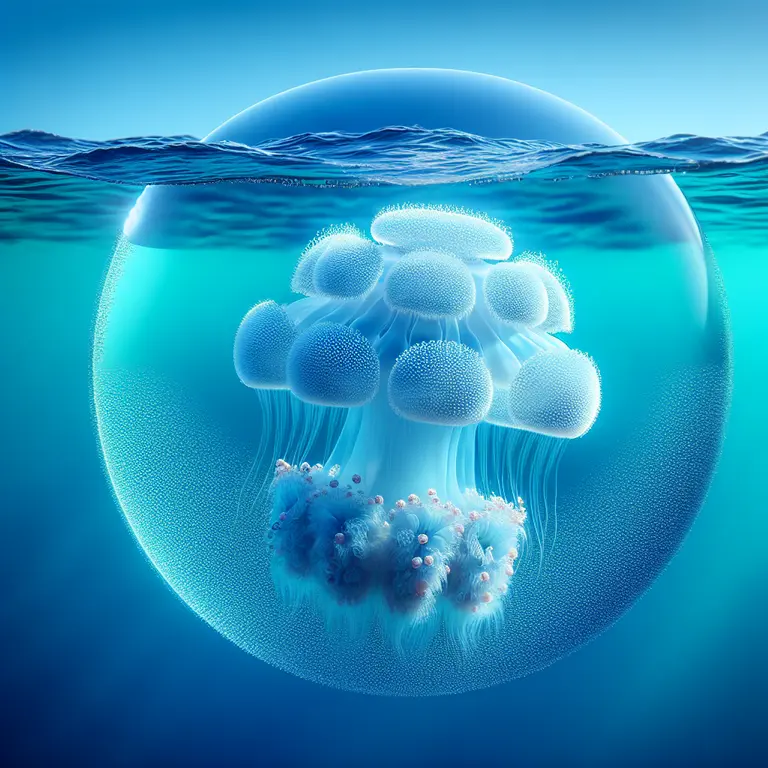
T. dohrnii is a hydrozoan, a class of marine animals more closely related to corals and sea anemones than to the iconic moon jellyfish most people picture. As an adult medusa, it measures roughly 4.5 millimeters in diameter, about the size of a pinhead, and is nearly transparent, with a bright red stomach visible through its bell. It is easily overlooked and, until Sommer’s accidental discovery, entirely unremarkable to science. What makes this origin story particularly striking is how long it took for the scientific community to fully appreciate what Sommer had witnessed. His initial observations, published in 1996 alongside Ferdinando Boero and other collaborators, were met with curiosity rather than urgency. It was only as molecular biology tools became sophisticated enough to interrogate the cellular mechanisms involved that the jellyfish began attracting serious international research attention. The delay between discovery and investigation is itself a reminder of how often transformative biological phenomena sit quietly in the literature, waiting for the right tools to arrive.
Transdifferentiation: Biology’s Most Radical Trick
The mechanism behind T. dohrnii’s apparent immortality is a cellular process called transdifferentiation, and it is extraordinarily rare. In most multicellular organisms, once a cell has committed to a specific identity, whether a muscle cell, a nerve cell, or a skin cell, that identity is essentially permanent. Stem cells can become many things, but a fully differentiated cell is considered a biological dead end. T. dohrnii breaks this rule entirely.
When the jellyfish is subjected to physical damage, starvation, disease, or the normal signals of senescence, it can revert its medusa body back to a cyst-like state and then regenerate as a fully functional polyp. During this process, mature differentiated cells transform directly into entirely different cell types without passing through an intermediate stem cell phase. Muscle cells become nerve cells. Digestive cells become reproductive cells. The organism is, in effect, rebuilding itself from the inside out using components it had already committed to other purposes.
To appreciate how unusual this is, consider that developmental biology has long treated cell fate as a one-way street. The process by which an embryonic stem cell gradually narrows its potential, committing first to a tissue lineage and then to a specific cell type, is called differentiation, and it is governed by layers of epigenetic regulation that essentially lock genes in or out of use. Reversing this process in a controlled, organism-wide, and apparently repeatable way is something no other known animal accomplishes with comparable reliability. The few documented cases of natural transdifferentiation in other organisms tend to occur only in specific tissues under highly constrained conditions. T. dohrnii does it wholesale.
The 2022 publication of T. dohrnii’s complete genome in the Proceedings of the National Academy of Sciences by a team led by Carlos López-Otín at the University of Oviedo revealed that the jellyfish possesses significantly expanded copies of genes associated with DNA repair, telomere maintenance, and stem cell renewal compared to its mortal relative, Turritopsis rubra. Telomeres, the protective caps on chromosomes that shorten with each cell division and are strongly associated with aging in most animals, do not appear to shorten in T. dohrnii during its reversion cycle. The genome also showed unusual duplication of genes related to polycomb repressive complexes, molecular machinery that controls which genes are expressed during development. These complexes appear to play a central role in the jellyfish’s ability to reset developmental gene expression patterns, essentially allowing the organism to re-read its own genetic instruction manual from the beginning rather than from the chapter it had most recently reached.
The Immortality Caveat and Ecological Consequences
The word immortality requires an important qualification here. T. dohrnii is not invincible. It can be eaten by predators, killed by disease, poisoned by pollution, or physically destroyed. What it cannot do, under the right conditions, is die of old age. The distinction is between biological immortality, the absence of intrinsic senescence, and literal indestructibility. Laboratory specimens have successfully completed multiple full reversion cycles, though the exact upper limit, if any exists, has not been established.
This distinction matters ecologically as well. Because T. dohrnii can theoretically cycle indefinitely, a single organism introduced to a new environment is not constrained by a normal lifespan. The species has spread dramatically beyond its Mediterranean origin, and researchers believe this is partly due to global shipping traffic. The jellyfish, in its hardy polyp stage, survives in cargo ship ballast water and has been documented in waters off Japan, Panama, Spain, Florida, and the Indo-Pacific. A 2004 study in the Journal of the Marine Biological Association of the United Kingdom described it as potentially biologically immortal and noted its spread as a likely consequence of transoceanic shipping, making it one of the most successful inadvertent invasive species in modern marine history, and one that almost nobody has heard of.
The ecological implications of an organism with no intrinsic lifespan are not fully understood, partly because T. dohrnii is small and occupies a relatively modest position in most food webs it enters. However, the precedent it sets for thinking about invasive species management is worth noting. Most models of population dynamics assume that individual organisms age and die on predictable schedules, which places natural limits on how rapidly a species can establish itself in a new environment. An organism that does not age on schedule disrupts those models in ways that are difficult to quantify. Whether T. dohrnii populations in non-native waters actually cycle through reversion events in the wild, or whether reversion is primarily a stress response triggered under laboratory conditions, remains an open and important question. The answer would significantly affect how researchers assess the species’ long-term ecological footprint in regions far from its origin.
What It Means for Human Aging Research
The jellyfish has attracted serious attention from gerontologists and molecular biologists, though translating its mechanisms to human medicine remains a distant and uncertain prospect. Human cells can be induced to transdifferentiate in laboratory settings. The Nobel Prize-winning work of Shinya Yamanaka demonstrated that mature human cells could be reprogrammed into induced pluripotent stem cells using just four transcription factors, a discovery that earned him the 2012 Nobel Prize in Physiology or Medicine, shared with John Gurdon. But the process is slow, imprecise, and carries a significant cancer risk. T. dohrnii appears to accomplish something analogous with extraordinary efficiency and without apparent oncogenic side effects, which is precisely what makes its genome so scientifically valuable.
Researchers are particularly interested in the jellyfish’s management of oxidative stress, which is one of the primary drivers of cellular aging across animal life. Reactive oxygen species, metabolic byproducts that damage DNA and proteins, accumulate in aging cells and are associated with virtually every age-related disease from neurodegeneration to cardiovascular decline. The López-Otín team found that T. dohrnii carries an unusually robust antioxidant gene complement, suggesting that its reversion process may be partly enabled by an exceptional ability to neutralize cellular damage before it becomes irreversible. In human aging research, the accumulation of this kind of damage is often described as a threshold problem: once enough cellular machinery has been compromised, the system cannot recover. The jellyfish appears to have evolved mechanisms that keep it well below that threshold, or that reset the damage accumulation counter entirely when reversion occurs.
The broader theoretical significance may ultimately matter as much as any specific therapeutic application. The longstanding assumption that senescence is an inevitable biological fact, encoded into the logic of multicellular life itself, turns out to be a generalization rather than a law. Evolution arrived at aging as a common solution to certain reproductive and ecological pressures, but it was not the only solution available. At least one animal found a different arrangement, doing so roughly 500 million years ago, long before vertebrates existed to age and die in the conventional way. The practical implications for human longevity medicine, if any, are likely decades away and may never translate directly from a millimeter-scale marine invertebrate to a large, complex mammal. But the existence of T. dohrnii permanently changes the question. The problem of aging is no longer whether biology can, in principle, escape it. We know it can. The question now is how, and whether that knowledge can be borrowed.
Conclusion
Christian Sommer almost certainly did not realize, watching that tiny jellyfish revert in a petri dish on the Italian coast, that he was observing one of the most biologically consequential phenomena in the animal kingdom. The decades of research that followed have confirmed and deepened the original observation in ways that continue to surprise specialists. T. dohrnii is not a curiosity or a metaphor. It is a working proof of concept, a demonstration that the biological machinery of aging is not a fixed constraint but a set of evolved choices, some of which can apparently be unmade. Whether human medicine will ever find a way to apply that lesson in a meaningful clinical context remains genuinely uncertain. What is no longer uncertain is that the question is worth asking, and that the answer, whatever form it eventually takes, began with a student, a petri dish, and a jellyfish that refused to die.
Sources & Further Reading
- Martínez, D.E. Mortality Patterns Suggest Lack of Senescence in Hydra. Experimental Gerontology, 1998. https://doi.org/10.1016/S0531-5565(97)00113-7
- Piraino, S., Boero, F., Aeschbach, B., and Schmid, V. Reversing the Life Cycle: Medusae Transforming into Polyps and Cell Transdifferentiation in Turritopsis nutricula. Biological Bulletin, 1996. https://www.jstor.org/stable/1542591
- Kawamura, K. et al. Turritopsis dohrnii Genome and Transcriptome Illuminate Mechanisms of Immortality. Proceedings of the National Academy of Sciences, 2022. https://doi.org/10.1073/pnas.2118763119
- Mills, C.E. Turritopsis dohrnii. University of Washington Friday Harbor Laboratories. https://faculty.washington.edu/cemills/Turritopsis.html