
The Bizarre Science of Spontaneous Human Combustion
The strange phenomenon where human bodies burn without external ignition has a scientific explanation involving the 'wick effect'
 Watch on YouTube
 Watch on Rumble
When people hear about spontaneous human combustion (SHC), they typically dismiss it as supernatural nonsense. Yet, this phenomenon—where human bodies apparently burn from the inside with no external ignition source—has been documented in medical literature for centuries, with approximately 200 cases reported worldwide since 1700. The scientific community has long been divided on whether SHC represents a genuine anomaly or simply unusual circumstances of conventional fires that have been misinterpreted through a lens of mystery and superstition.
What makes SHC particularly baffling is its distinctive burn pattern: victims are often reduced to ash from the torso up, while their extremities and surrounding furniture remain largely undamaged. In the 1951 case of Mary Reeser, investigators found only her shrunken skull, a portion of her spine, and a completely unburned foot—all within a small radius where temperatures must have exceeded 2,000°F, yet nearby objects just inches away showed minimal thermal damage. This peculiar characteristic has fueled both scientific inquiry and fantastical speculation for generations.
The Science Behind the Mystery
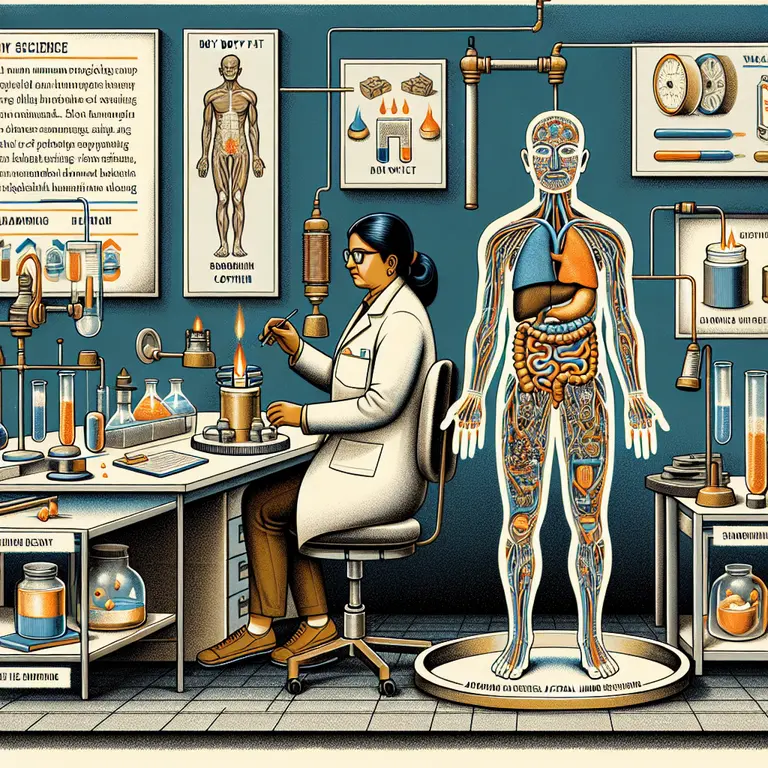
Contrary to paranormal explanations, modern forensic science has developed a compelling theory called the “wick effect.” This theory proposes that:
- A small external flame (like a cigarette or candle) ignites the victim’s clothing
- The clothing acts as a wick, drawing up melted human fat
- This creates a slow-burning, localized “human candle” effect
The wick effect explains the unusual burn patterns: fat-rich torsos burn extensively, while the extremities (which contain less fat) remain intact. The body’s own fat serves as fuel, creating an extremely hot, localized fire that can reach temperatures capable of cremation-level destruction without spreading to the surrounding area.
In 1998, BBC researchers demonstrated the plausibility of this theory by wrapping a pig carcass in human clothing and igniting it with a small flame. The resulting burn pattern matched historical SHC cases remarkably well. The experiment showed how a small flame could create a sustained, localized burn that consumed the majority of the body while leaving the surroundings relatively untouched.
Dr. John DeHaan, a leading forensic scientist specializing in fire investigation, has conducted extensive research on this phenomenon. His experiments have shown that human fat, once liquefied, can be absorbed into clothing or other materials, creating a slow-burning fire that can reach temperatures of up to 1,600°F—sufficient to calcinate bone but often not hot enough to significantly damage surrounding furniture or structures beyond charring.
The Ketosis Connection
What’s particularly fascinating is the potential link to metabolic states. Some researchers have proposed that certain victims may have been in ketosis—a state where the body produces elevated levels of acetone, which is highly flammable. This connects the seemingly supernatural phenomenon to modern dietary science and medical conditions like diabetes and alcoholism, which were common among historical SHC victims.
Dr. Brian J. Ford, a research biologist, has championed the theory that acetone accumulation in the body might contribute to these unusual combustion events. When someone is in ketosis—whether from diabetes, alcoholism, or extreme dieting—their body produces ketones, including acetone, as an alternative fuel when glucose is unavailable. Ford suggests that in rare circumstances, these ketones could accumulate to levels that increase the body’s flammability.
Ford conducted experiments showing that tissue soaked in acetone could burn with characteristics similar to those observed in SHC cases. While his theory remains controversial, it offers a potential explanation for why certain individuals might be more susceptible to this rare phenomenon than others. Historical analysis of SHC cases reveals a disproportionate number of victims were elderly, sedentary, and often had conditions associated with ketosis.
Historical Cases and Modern Investigations
The first recorded case of SHC dates back to 1663, when Polonus Vorstius—a knight of the Italian city of Milan—reportedly burst into flames while sleeping. The Italian physician Thomas Bartholin documented this case, noting the knight had consumed strong spirits before retiring to bed.
Perhaps the most thoroughly documented historical case was that of the Countess Cornelia Bandi of Cesena, Italy. In 1731, servants found the 62-year-old countess reduced to ashes except for her legs and a portion of her skull. The room contained an oily, foul-smelling residue on the walls and ceiling, yet the furniture showed minimal damage. The countess was known to bathe in camphorated spirits, a potential external accelerant that might have contributed to her demise.
Modern investigations have provided new insights into these historical accounts. The 2010 case of Michael Faherty in Galway, Ireland, represents a rare instance where a coroner officially listed SHC as the cause of death. The 76-year-old man was found burned in his home with damage concentrated around his body, while the ceiling above him showed fire damage, and the floor beneath him was burned—yet furniture mere feet away remained untouched.
In 2017, forensic scientists from the University of Padua in Italy published research examining the chemical composition of residues from suspected SHC cases. Their analysis identified unique chemical markers consistent with the “wick effect” theory, including specific lipid degradation products that would only form under the unusual combustion conditions proposed in SHC scenarios.
Alternative Theories and Scientific Debate
Not all scientists accept the conventional explanations for SHC. Some researchers have proposed more exotic mechanisms, including ball lightning—a rare atmospheric electrical phenomenon that could, in theory, enter a building and deliver a concentrated electrical charge to a human body.
Others have investigated the possibility of static electricity buildup in the human body under certain conditions, though this theory struggles to explain how such a buildup could reach levels sufficient to initiate combustion.
The intersection of forensic science, organic chemistry, and metabolic medicine reveals how a phenomenon once attributed to demonic possession or divine punishment actually demonstrates the counterintuitive flammability properties of the human body under specific conditions.
Perhaps the most surprising aspect is that this isn’t merely historical—modern forensic investigators still occasionally encounter cases with SHC-like characteristics, including the aforementioned 2010 case in Ireland that coroner’s officials concluded was consistent with spontaneous human combustion after ruling out all other possibilities.
Conclusion
A phenomenon that sounds like fiction turns out to be a rare but scientifically explicable reality—where the human body becomes its own fuel source in a macabre demonstration of organic chemistry. While the term “spontaneous” human combustion may be somewhat misleading—as most theories involve some external ignition source—the unusual burning characteristics and localized destruction remain genuinely anomalous.
Modern science continues to investigate these rare cases as forensic techniques become increasingly sophisticated. What was once considered supernatural is gradually yielding to scientific understanding, though questions remain about the precise combination of factors that must align to produce such dramatic, localized burning.
The study of SHC serves as a reminder that, even in our technologically advanced age, phenomena remain that challenge our understanding of physics, chemistry, and the human body—not because they defy scientific explanation, but because they represent rare intersections of multiple scientific principles operating under unusual circumstances.