
The Forgotten Toilet Paper Rebellion of 1970's Japan
How a rumor about toilet paper shortages triggered nationwide panic buying and social unrest in Japan, revealing deep anxieties in a rapidly modernizing society.
 Watch on YouTube
 Watch on Rumble
In October 1973, a seemingly minor event triggered one of the strangest consumer panics in modern history. A casual comment on a Japanese television show about potential paper shortages spiraled into nationwide chaos, empty store shelves, and even physical confrontations—all over toilet paper. This extraordinary episode, forgotten mainly outside Japan, offers profound insights into consumer psychology, media influence, and the lingering effects of historical trauma on modern societies.
The Spark That Ignited a Nation
The panic began when a politician appeared on NHK (Japan’s public broadcaster) discussing how the ongoing oil crisis might affect paper supplies. A housewife watching the program misinterpreted his comments and began spreading rumors of imminent toilet paper shortages. Within 48 hours, stores across Tokyo reported toilet paper flying off shelves.
The specific broadcast featured Eiji Mizutani, an official from the Ministry of International Trade and Industry, who mentioned that paper companies might face production challenges due to the OPEC oil embargo. His statement was measured and technical, noting that “if the current situation continues, there could be effects on various paper products.” However, in the heightened anxiety of the oil crisis era, this nuanced comment transformed into something far more alarming as it spread through neighborhoods and workplaces.
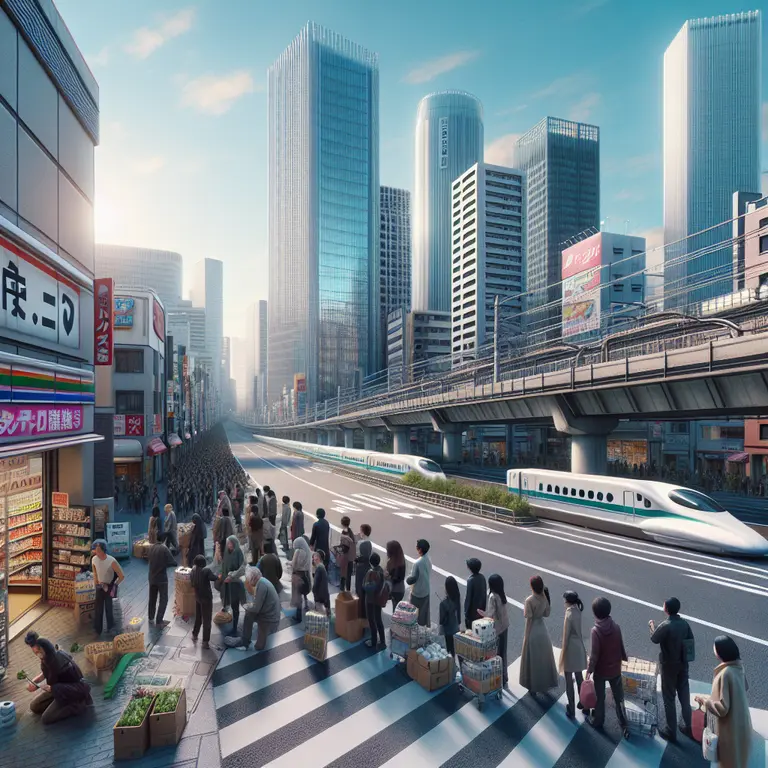
By mid-November, the situation had escalated beyond all proportion. Department stores in Tokyo’s Ginza district reported selling their entire monthly toilet paper allocation in a single morning. In Osaka, a shipment of 10,000 toilet paper rolls delivered to a supermarket disappeared in under 45 minutes. The Seiyu chain implemented a rationing system, limiting customers to two packages per person. Still, even this proved difficult to enforce as shoppers made multiple visits or sent family members to circumvent restrictions.
What’s particularly surprising is the scale and speed of the reaction. By November 1973, stores imposed strict purchase limits, black markets emerged with prices 500% above normal, physical altercations broke out in shopping centers, some families hoarded hundreds of rolls in their apartments, and the government was forced to make emergency television announcements to calm the public.
The Psychological Perfect Storm
What makes this incident fascinating is that there was never an actual toilet paper shortage—until the panic buying created one. The crisis revealed something profound about post-war Japanese society: despite rapid economic growth and modernization, many citizens still carried deep psychological scars from wartime deprivation.
Dr. Hiroko Takeda, a social historian at the University of Tokyo, has documented how the toilet paper panic reflected Japan’s “economic miracle” paradox. “Here was a nation that had achieved unprecedented prosperity in just two decades,” she writes, “yet beneath the surface of consumer confidence lay a deep-seated fear that it could all disappear overnight.” This collective memory of scarcity created perfect conditions for panic buying.
The timing also coincided with Japan’s first real economic challenge since its postwar reconstruction. The oil crisis threatened the energy supply that powered Japan’s manufacturing miracle. For many Japanese citizens who had experienced wartime rationing as children, the threat of scarcity triggered robust emotional responses that overrode logical thinking.
Anthropologists and economists now view this incident as a classic example of a “phantom shortage”—where fear alone creates the very scarcity people dread. The toilet paper panic has become a textbook case in behavioral economics, demonstrating how quickly rational consumers can abandon normal behavior when necessities are perceived as threatened.
Media Amplification and Government Response
The role of media in both triggering and eventually resolving the crisis reveals the powerful influence of information channels in 1970s Japan. While the initial television comment sparked the panic, the subsequent newspaper coverage dramatically amplified it. The Asahi Shimbun, one of Japan’s largest newspapers, ran front-page photos of empty store shelves, inadvertently accelerating the buying frenzy.
The government’s response proved equally intriguing. Initially dismissive, officials quickly realized the potential economic and social disruption of the panic. Prime Minister Kakuei Tanaka made an unprecedented television address specifically about toilet paper on November 23, 1973, assuring citizens that “Japan has sufficient pulp supplies and production capacity to meet all domestic toilet paper needs.”
Behind the scenes, the government coordinated with paper manufacturers to increase production by 30% and implemented emergency distribution systems that prioritized urban centers. They also arranged for prominent newspapers to publish detailed infographics showing Japan’s toilet paper production capacity and existing inventory levels—an early example of using data visualization to combat public misinformation.
Perhaps most effectively, they enlisted popular television personalities to make light of the situation, using humor to defuse tension. A comedy sketch on the popular program “Shoten” mocked hoarders by showing a family building a “toilet paper castle” in their living room, helping to stigmatize panic buying and gradually restore standard purchasing patterns.
The Forgotten Aftermath and Long-Term Impact
The most counterintuitive aspect of this crisis was its long-term impact on Japanese manufacturing and consumer culture. The panic directly led Japan to become a world leader in toilet paper production technology. Paper companies, stung by criticism during the crisis, invested heavily in production efficiency and supply chain resilience. Daio Paper Corporation developed new high-speed manufacturing techniques that reduced production costs by 15%, while Nippon Paper pioneered recycling methods that decreased reliance on imported pulp.
The crisis also influenced Japanese residential architecture. The development of smaller, more efficient storage solutions in Japanese apartments became a priority as urban dwellers sought ways to store essential supplies without sacrificing precious living space. Furniture makers like Muji introduced specialized storage systems specifically designed for toilet paper and other household essentials.
Perhaps most significantly, the episode contributed to a cultural shift toward emergency preparedness that continues to this day. When the Tōhoku earthquake and tsunami struck in 2011, many older Japanese citizens immediately bought toilet paper—a behavioral echo from nearly 40 years earlier. However, the government’s improved crisis communication systems, developed partly in response to lessons learned from the toilet paper panic, helped prevent a repeat of the 1973 hoarding behavior.
Conclusion: Beyond a Quirky Historical Footnote
The Great Toilet Paper Panic of 1973-74 deserves more attention than it typically receives in economic and social histories. Far from being merely a quirky anecdote, it illuminates the complex interplay between media, psychology, and consumer behavior during times of perceived crisis. It demonstrates how quickly social contagion can spread even in a highly educated, affluent society when basic security is threatened.
Perhaps most surprising is how this incident crosses disciplines: what began as an economic phenomenon reveals insights into mass psychology, media influence, post-war trauma, and even architectural design. The Great Toilet Paper Panic serves as a reminder that even the most mundane household items can become powerful symbols of security and status during times of perceived crisis. This lesson resonated again globally during the COVID-19 pandemic, when toilet paper once more became an unexpected barometer of social anxiety.