
The Bacteria That Make Electricity When They Breathe
Certain microorganisms can generate electrical current as a byproduct of their normal metabolic processes.
 Watch on YouTube
 Watch on Rumble
Imagine organisms that don’t just consume energy but actually produce electricity as they breathe. This isn’t science fiction—it’s happening right now in soils, sediments, and even your own gut. These microscopic power plants represent one of biology’s most overlooked revolutions—a metabolic strategy that may have shaped Earth’s early atmosphere, influenced the evolution of nervous systems, and now offers solutions to some of our most pressing technological challenges.
Electrogenic Bacteria: Nature’s Power Plants
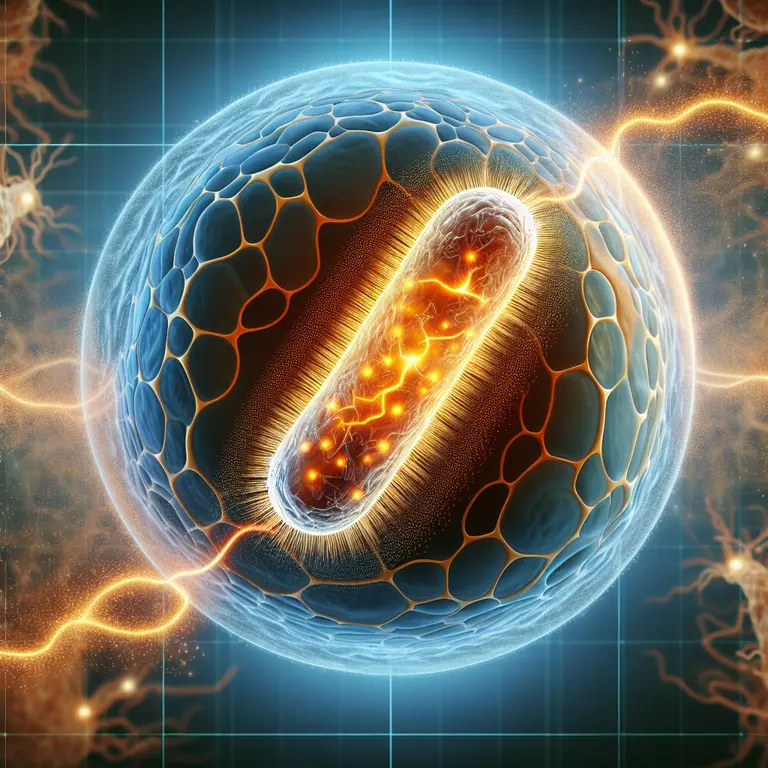
Deep in oxygen-deprived environments like marsh sediments and deep-sea vents live remarkable microorganisms called “electrogenic bacteria.” Species like Geobacter sulfurreducens and Shewanella oneidensis have evolved an astonishing metabolic trick: they can transfer electrons directly outside their cells during respiration.
Unlike humans, who use oxygen as the final electron acceptor in cellular respiration, these bacteria pump electrons directly onto external substances—effectively creating an electrical current as a byproduct of their normal metabolism. This process, known as extracellular electron transfer (EET), allows these microbes to “breathe” using solid materials like iron oxides, manganese compounds, and even uranium.
What makes this particularly fascinating is the mechanism. Some electrogenic bacteria grow specialized conductive appendages called bacterial nanowires or pili—essentially biological electrical cables—that can extend several times the length of the bacterial cell itself. These protein filaments contain precisely arranged amino acids that create electron-hopping pathways, allowing electricity to flow at distances up to several centimeters, an extraordinary range in the microbial world.
The electrical current generated by a single bacterium is minuscule—measured in femtoamperes (10^-15 amperes). However, in colonies, these bacteria form vast, interconnected networks in which electrical signals propagate across millions of cells, generating measurable voltages and enabling community-level behaviors that resemble primitive neural networks.
The Shocking Discovery
This phenomenon remained unknown until the 1980s, when microbiologist Derek Lovley accidentally discovered Geobacter while investigating pollution in the Potomac River. What makes this discovery particularly mind-bending is that these bacteria essentially “breathe” solid metals. They extend tiny protein nanowires (pili) from their cells—biological electrical cables that can transmit electrons over distances many times the bacteria’s body length.
The discovery was serendipitous—Lovley was studying how microbes might degrade pollutants when he noticed something unusual: sediment samples were oxidizing organic compounds while simultaneously reducing iron oxide, yet no known metabolic pathway could explain this connection. After isolating the responsible organism, he realized he had found something revolutionary: a life form that could directly transfer electrons to external materials.
Subsequent research revealed this wasn’t an isolated curiosity but a fundamental biological process widespread in nature. Scientists have since identified dozens of bacterial species capable of generating electricity, belonging to diverse taxonomic groups from Proteobacteria to Firmicutes. Even more surprisingly, some common gut bacteria like certain Escherichia coli strains can produce electricity under the right conditions, suggesting these “living batteries” might even exist within our bodies.
The field remained relatively obscure until the early 2000s, when advances in nanoscience and materials characterization techniques allowed researchers to visualize and measure these bacterial electrical systems directly. Atomic force microscopy revealed the physical structure of bacterial nanowires. At the same time, sophisticated electrochemical techniques confirmed that electrons were indeed flowing through these biological structures, like that in synthetic semiconductors.
Why This Upends Our Understanding
The discovery challenges our fundamental understanding of biological energy systems in three ways:
First, direct extracellular electron transfer represents a radical departure from classical biochemistry. For generations, biologists have taught that energy transfer in living systems requires diffusible chemical intermediates—molecules that physically carry electrons between reaction sites. Electrogenic bacteria bypass this requirement entirely, creating direct electrical connections with their environment that operate more like electrical circuits than traditional metabolic pathways.
Second, these bacterial communities form living electrical grids that blur the distinction between individual organisms and collective systems. When thousands of bacteria connect via nanowires, they form a distributed network in which resources and signals can be shared over distances far beyond any single cell could manage. This challenges our concept of what constitutes an individual organism and suggests that some bacterial communities might function more like multicellular entities than independent cells.
Third, phylogenetic analysis suggests this electrical respiration may represent one of Earth’s oldest metabolic strategies. Before oxygen became abundant in Earth’s atmosphere, early microbes would have needed alternative electron acceptors. The ability to use solid minerals as respiratory partners might have been crucial during Earth’s early history, possibly predating photosynthesis and dating back over 3 billion years. Some geobiologists now propose that these electricity-generating processes may have played a key role in establishing Earth’s early biogeochemical cycles and in forming certain mineral deposits.
From Microbiology to Sustainable Technology
This obscure microbiological phenomenon has spawned an entirely new field of technology: microbial fuel cells (MFCs). These devices harness bacterial electricity to generate power while simultaneously performing useful functions, such as wastewater treatment or environmental remediation.
In conventional MFCs, bacteria grow on an anode, where they oxidize organic matter and transfer the resulting electrons directly to the electrode. These electrons then flow through an external circuit to a cathode, generating usable electricity. Modern designs can achieve power densities approaching 4 watts per square meter of electrode surface—not enough to power your home, but sufficient for low-power applications in remote settings.
Beyond simple power generation, researchers have developed microbial electrosynthesis systems where electricity drives bacteria to produce valuable chemicals from waste carbon sources. Companies like Electrochaea are scaling up technologies that use electricity-consuming bacteria to convert hydrogen and carbon dioxide into methane, effectively storing renewable energy as natural gas.
Perhaps most surprisingly, researchers at the Naval Research Laboratory have developed “benthic unattended generators” (BUGs)—seafloor devices powered entirely by electrical current generated by sediment bacteria, capable of operating sensors and small electronics indefinitely without batteries. These systems have operated continuously for over 15 years in marine environments, providing persistent power for oceanographic monitoring with no maintenance.
The Hidden Connection to Neuroscience
The protein structures these bacteria use to conduct electricity bear striking similarities to those found in neural systems. Some researchers now theorize that the evolution of nervous systems may have repurposed ancient bacterial electron transport mechanisms, suggesting our own thoughts may operate on principles first developed by these microscopic living batteries.
Specifically, the cytochrome proteins that enable electron transport in bacterial nanowires share structural motifs with ion channels in neural membranes. Both systems rely on precisely arranged protein structures that create low-resistance pathways for charged particles. Moreover, both bacterial biofilms and neural networks exhibit emergent electrical behaviors that cannot be predicted from their individual components—simple electrical signals combine to create complex, adaptive responses.
This unexpected connection has inspired a new field called “electromicrobiology,” which explores how electrical signaling might coordinate behavior across microbial communities. Recent studies have demonstrated that bacterial biofilms can transmit electrical signals that synchronize metabolism across millions of cells, allowing them to respond collectively to environmental changes much like a primitive nervous system.
Conclusion: The Electric Biosphere
The discovery of electricity-generating bacteria has transformed our understanding of Earth’s biosphere. What once seemed like a curious metabolic oddity has revealed itself as a fundamental biological process that shapes environments, drives geochemical cycles, and offers new technological possibilities.
As research continues, we’re finding that the electric biosphere extends far beyond a few specialized bacteria. Electrical interactions appear to play crucial roles in environments from the human microbiome to deep-sea hydrothermal vents. Some researchers now propose that electrical connections between different microbial species may be as vital to ecosystem function as chemical interactions.
Next time you walk across damp soil, remember: you’re stepping on billions of tiny power plants that have been quietly generating electricity for billions of years before humans ever dreamed of harnessing lightning or inventing batteries. These living electrical systems represent not just a biological curiosity but a glimpse into life’s remarkable capacity to harness energy in ways we’re only beginning to understand—and perhaps to harness for our own sustainable future.